

Stainless Steel CNC Machining: The Critical Bridge from Digital Design to Industrial Reality
In the relentless pursuit of engineering excellence, the journey from a conceptual sketch to a fully functional product is fraught with challenges. Among the myriad manufacturing technologies available today, Computer Numerical Control (CNC) machining stands out as a bastion of precision and reliability. When this process is paired with stainless steel—a material synonymous with endurance and resilience—the result is a manufacturing solution that not only produces end-use components but also serves as the definitive testing ground for new ideas. Stainless steel CNC machining services have become an indispensable asset, not merely for their production capabilities, but for their pivotal function in de-risking innovation and validating engineering hypotheses during the prototyping stage.
Understanding the Material-Process Synergy
Stainless steel is not a single entity but a family of iron-based alloys defined by a minimum chromium content of 10.5%. This chromium is the secret to its famed "stainless" quality, forming an invisible, adherent film that protects against rust and chemical attack. Yet, this same protective quality, combined with the alloy's inherent toughness, makes it one of the more challenging materials to machine. It exhibits high ductility, which can lead to built-up edges on cutting tools, and its low thermal conductivity means heat generated during cutting tends to concentrate at the tool-workpiece interface.
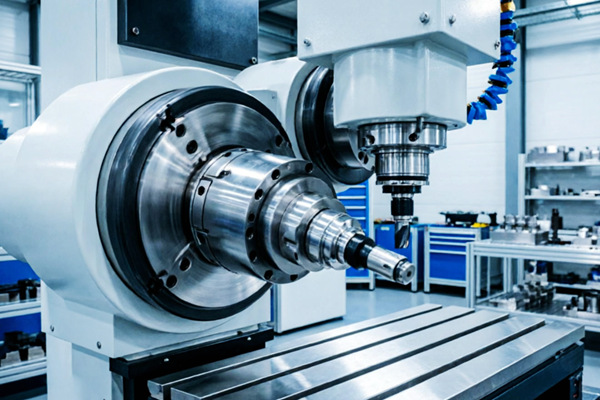
This is where the expertise of a specialized CNC machining service becomes evident. Skilled machinists must navigate these hurdles by selecting the appropriate tool geometries, applying optimized cutting speeds and feeds, and utilizing high-pressure coolant systems. The complexity of machining stainless steel is precisely why outsourcing to a professional service is often the most prudent path for manufacturers—it transforms a potential production bottleneck into a streamlined operation that consistently delivers parts with tolerances measured in microns.
Ubiquitous Applications Across Strategic Sectors
The versatility of stainless steel CNC machining manifests across a diverse spectrum of industries, each demanding specific attributes from the finished parts.
In themarine and offshore engineeringsector, components such as propeller shafts, pump housings, and deck fittings are regularly machined from duplex or super-austenitic stainless steels. These materials are chosen for their exceptional resistance to pitting and crevice corrosion in seawater, a harsh environment that would rapidly degrade lesser metals.
Thefood and beverage processingindustry relies heavily on machined stainless steel parts, particularly those from the 304 and 316 families. In this context, the material's non-reactive surface is critical. Machined fittings, valves, and conveyor components must be easily cleanable and free from porosity to prevent bacterial growth, adhering to stringent sanitary design standards.
In the rapidly advancing field ofsemiconductor manufacturing, stainless steel CNC machining is utilized for producing vacuum chambers, gas delivery panels, and precision fixture plates. These parts require extremely low levels of outgassing and exceptional dimensional stability under varying thermal loads, specifications that only high-grade CNC machining can consistently achieve.
Perhaps most critically, theheavy machinery and construction equipmentsectors depend on large-scale stainless steel components for structural supports, gearboxes, and hydraulic cylinders. These parts are subjected to high impact loads and abrasive conditions, necessitating the superior yield strength and impact resistance that hardened stainless steel grades provide.
Prototyping: The Validation Nexus
While the production of these components is vital, the most intellectually and financially significant application of stainless steel CNC machining often occurs long before mass production begins—at the prototyping phase. In modern product development, a prototype must do more than simply look like the final product; it mustbehavelike it. This is where the fidelity of CNC machining is irreplaceable.
When engineers require empirical data to validate their computational fluid dynamics (CFD) or finite element analysis (FEA) models, they need a physical object that replicates the final material's thermal conductivity, elastic modulus, and hardness. Stainless steel CNC machining provides this with absolute authenticity. A prototype machined from a solid billet is isotropic, meaning its material properties are consistent in all directions, unlike parts produced via powder metallurgy or certain additive techniques. This isotropy is essential for accurate stress-strain testing and fatigue life assessments.
Furthermore, the prototyping stage is a vital exercise in design for manufacturability (DFM). By machining a prototype, engineers can physically evaluate feature accessibility—can the deep cavity be reached with a standard end mill? Will the thin walls hold up against cutting forces, or will they chatter and distort? These are practical questions that cannot be answered by simulation alone. Each prototype iteration provides tactile, actionable feedback that leads to design refinement, reducing the risk of costly modifications to production tooling downstream. This iterative process effectively compresses the development timeline, enabling companies to detect flaws early, when the cost of correction is minimal, and accelerating the journey from laboratory concept to commercial deployment.
Conclusion: A Strategic Partnership for Progress
The value proposition of stainless steel CNC machining services extends far beyond the mere production of metal components. It offers a strategic partnership that empowers designers and engineers to push boundaries with confidence. By providing the means to create parts that survive the harshest industrial environments and by offering a flawless medium for performance validation, these services form the crucial bridge between the digital realm of CAD models and the physical demands of the real world. As industries continue to pursue greater efficiency, durability, and safety, the symbiotic relationship between CNC technology and stainless steel will remain a fundamental pillar of modern manufacturing, driving progress from the prototype bench to the global market.




