

Mastering the Art of Low Volume Plastic Parts Production
In the contemporary manufacturing landscape, the era of "one-size-fits-all" mass production is giving way to an age of specialization, customization, and rapid iteration. While high-volume injection molding—producing millions of identical parts—remains the bedrock of the consumer goods industry, a quieter but equally vital revolution is occurring at the opposite end of the spectrum: low volume plastic parts production. Defined generally as runs ranging from 50 to 10,000 units, low volume manufacturing occupies a critical niche that addresses the needs of medical devices, aerospace components, specialty automotive restoration, and prototype validation. However, producing small quantities of plastic parts is not merely "scaled-down" high-volume production; it is a distinct discipline that requires a unique convergence of material science, tooling strategy, and economic calculation. This article explores the technical nuances, manufacturing methodologies, and strategic considerations essential for success in low volume plastic parts manufacturing.
The Economic Case for Low Volume Tooling
The most significant barrier to entry in plastic part production has historically been the cost of tooling. Traditional steel injection molds, designed for millions of cycles, can cost upwards of $50,000 to $100,000, a prohibitive investment when only a few hundred parts are required. This is where the economic philosophy of low volume manufacturing diverges dramatically. The goal is no longer "cost-per-part" minimization but rather "total-cost-to-market" minimization.
To achieve this, manufacturers utilize "bridge tooling" or "soft tooling." Aluminum molds are a prime example. While aluminum cannot withstand the abrasive wear of glass-filled nylons for a million cycles, it is perfectly adequate for runs of 1,000 to 5,000 parts. Aluminum offers superior thermal conductivity compared to steel, resulting in faster cooling times and reduced cycle times. Furthermore, the machining of aluminum is significantly faster and less expensive than hardened steel, allowing for tool fabrication in weeks rather than months. This "quick-turn" capability allows companies to validate form, fit, and function before committing to the financial outlay of production tooling, effectively de-risking the product development cycle.
Additive Manufacturing: The Bridge Between Design and Production
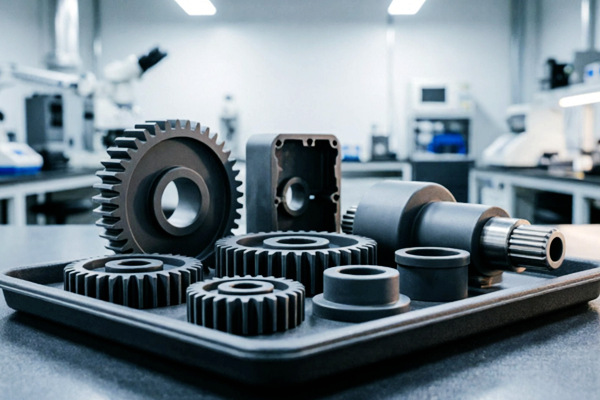
While CNC-machined aluminum molds represent one avenue for low volume production, additive manufacturing (AM)—specifically 3D printing—has blurred the lines between prototyping and production. For volumes under 500 units, technologies like Multi-Jet Fusion (MJF) and Stereolithography (SLA) are no longer merely for "looks-like" models but are producing "works-like" end-use parts.
The strategic advantage of AM in low volume contexts lies in geometric freedom. Traditional molding requires draft angles, uniform wall thicknesses, and complex slide mechanisms for undercuts. Additive manufacturing eliminates these constraints, allowing for organic lattice structures that reduce weight, internal channels for fluid cooling, and complex assemblies printed as a single piece. However, the material properties remain a caveat. While materials like Nylon 12 and glass-filled composites have achieved mechanical properties approaching injection-molded thermoplastics, they often exhibit anisotropic behavior—meaning they are weaker along the Z-axis of the print. Therefore, the engineer must decide: is the "lot size" small enough to justify the material limitations of 3D printing, or does the application require the isotropic strength of a true injection-molded part?
Hybrid Approaches: The "Print-and-Cast" Methodology
A sophisticated approach emerging in the industry involves the hybridization of additive and traditional manufacturing: Printed molds for injection molding, sometimes referred to as "rapid injection molding." In this process, a high-temperature photopolymer resin is 3D printed and used as an injection mold insert, rather than machining aluminum. This allows for the injection molding process—with its superior material properties and surface finish—to be utilized without the tooling cost or lead time of aluminum.
This methodology is particularly suited for pilot runs and clinical trial batches in the medical sector. It enables engineers to test how a polymer flows through a gate, where knit lines form, and how the part shrinks, providing empirical data that can be used to refine the design for the eventual steel mold. The drawback is the limited longevity of the printed inserts; they typically last for only 50 to 100 shots and require specialized injection molding machines with lower clamping pressures. Nevertheless, for a manufacturer seeking 100 functional parts with production-grade material (e.g., PEEK or Ultem), this provides a cost-effective pathway that pure 3D printing cannot match.
Overmolding and Assembly Considerations
Low volume production often implies a level of customization that necessitates assembly of multiple components. Overmolding—the process of molding one plastic material over a substrate—is notoriously expensive in high volumes due to the complexity of the tooling required. However, in low volume, manufacturers can exploit "Pick and Place" robotic integration or manual loading inserts into the mold. While this increases the cycle time, the labor cost is often offset by the elimination of secondary assembly operations.
Furthermore, when dealing with low volumes, the post-processing requirements become a critical cost driver. High-volume production typically features automated sprue removal and degating. In low volume, manual degating, ultrasonic welding, or laser marking are viable, albeit slower, options. The design for low volume must account for ease of manual handling. For instance, avoiding sharp corners that require difficult milling in the tool and designing for "easy-eject" features ensures that the technician can quickly move from one cycle to the next without damaging the part or the mold.
Material Selection in the Low Volume Context
The material selection matrix shifts significantly when production runs are low. In high-volume manufacturing, a small reduction in material cost per pound equates to significant savings over a million parts. In low volume, the price of the raw resin is secondary to its processability. Manufacturers are less concerned with the nominal cost of a polymer and more concerned with its "weldability," its melt-flow index, and its drying requirements.
For low volume, it is often advantageous to specify unfilled resins. Filled resins—such as glass-filled polycarbonate—are extremely abrasive and will quickly wear out an aluminum mold. In a low volume context, if a filled resin is mandatory for stiffness, the manufacturer must accept either a steel mold (defeating the cost-saving purpose) or a limited tool life. Conversely, using a higher-grade, unfilled engineering resin (such as impact-modified PBT) might achieve the required mechanical properties without wearing out the tool, ensuring the entire lot of 1,000 parts can be produced with a single, affordable mold.
Quality Control and Validation
Statistical Process Control (SPC) becomes less statistically relevant at 1,000 units than it is at 1,000,000 units. The low volume manufacturer cannot rely on sampling plans that assume a normal distribution of defects over a massive population. Instead, the focus shifts to "First Article Inspection" (FAI) and 100% dimensional inspection for critical-to-function features.
Given the lower output, the manufacturing facility has the luxury of time to inspect each part meticulously. CMM (Coordinate Measuring Machine) checks can be performed on a higher percentage of the lot. Furthermore, the validation of the process itself—IQ/OQ/PQ (Installation Qualification, Operational Qualification, Performance Qualification)—must be streamlined. For low volume, process capability (Cpk) is often forgone in favor of "attribute" testing (pass/fail), provided that the design of the part includes robust failure modes (e.g., snap-fit arms that do not break before deflecting fully).
Sustainability and Inventory Strategy
Low volume production is inherently more sustainable than mass production when viewed through the lens of waste. It reduces the risk of obsolete inventory. Producing 1,000 parts for a niche medical device ensures that if the device is updated in two years, the remaining inventory is minimal, preventing the common industry practice of scrapping millions of outdated parts.
However, low volume can be energy-intensive per part. The injection molding machine must heat up the barrel and clamp the mold for just a few hours, as opposed to running continuously for weeks. To optimize sustainability, manufacturers are increasingly utilizing electric injection molding machines for low volume runs. These machines consume less energy during startup and shut-down phases and offer higher precision, reducing the scrap rate during the initial "process stabilization" phase, which can be disproportionately high in short runs.
Conclusion
Low volume plastic parts production is a sophisticated manufacturing ecosystem that requires a distinct mindset. It is not a compromise on quality for the sake of cost, but rather a recalibration of priorities—valuing flexibility, speed, and material integrity over economies of scale. By strategically employing aluminum soft tooling, additive manufacturing, and hybrid processes, manufacturers can deliver functional, end-use parts that meet strict regulatory and mechanical demands without the burden of million-dollar tooling investments. As product lifecycles shorten and personalization becomes the standard, the ability to execute low volume runs with high precision will cease to be a niche capability and will instead become a core competitive advantage. The manufacturer that masters the margins of production—turning small numbers into high-impact solutions—will lead the next wave of industrial innovation.




