

Rapid Low Volume Manufacturing Services Bridging Innovation and Market Entry
In the modern product development landscape, the gap between a proven prototype and a full-scale production run is often the most perilous phase for innovators. This is where rapid low volume manufacturing services have emerged as a critical enabler, allowing companies to transition from design validation to market entry without the prohibitive costs and lead times associated with traditional mass production tooling. These services are not merely about making fewer parts; they represent a strategic approach that combines speed, flexibility, and cost-efficiency to de-risk the commercialization of new products.
The Strategic Imperative for Low Volume Production
Historically, manufacturing was bifurcated into two extremes: rapid prototyping (which produced one or a few parts via methods like 3D printing or CNC machining) and high-volume production (which required expensive hard tooling like injection molds or stamping dies). The space between—typically 50 to 10,000 units—was a "valley of death" for many hardware startups. Rapid low volume manufacturing fills this void. It utilizes agile processes and scalable tooling strategies to produce bridge quantities that satisfy early market demand, clinical trials, pilot programs, or limited-edition releases. This approach allows companies to generate revenue, gather real-world user feedback, and refine their designs before committing to capital-intensive mass production.
Core Technologies and Methodologies
The service offering is defined by a toolbox of advanced, flexible manufacturing technologies. Unlike conventional high-volume lines, these services prioritize quick changeover and minimal tooling investment.
For plastic components, urethane casting and aluminum tooling for injection molding are staples. Urethane casting, using silicone molds, is ideal for 10 to 100 parts, offering excellent surface finish and the ability to replicate injection-molded properties. For quantities up to 10,000, aluminum molds (soft tooling) are employed. While they have a shorter lifespan than steel molds, they can be produced in days rather than weeks and cost a fraction of hard tooling, making them perfect for bridge production.
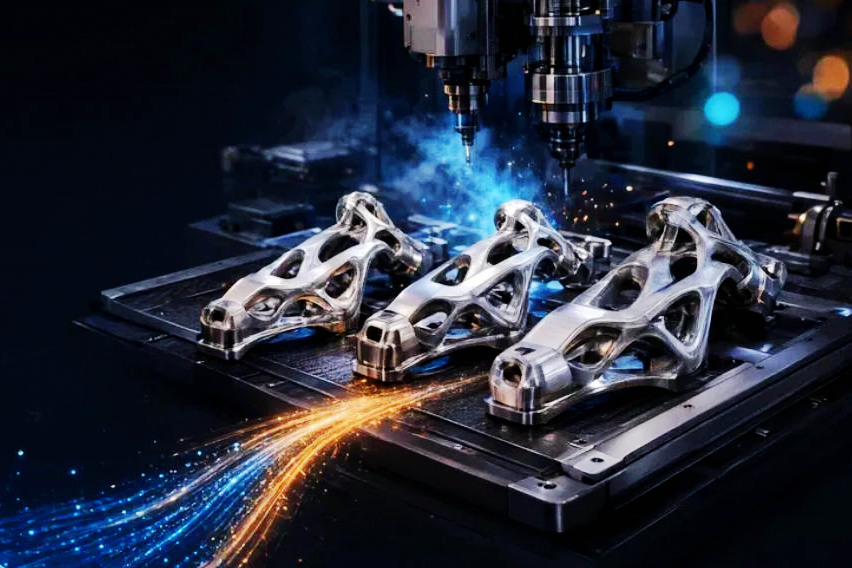
For metal parts,CNC machiningremains the workhorse for low volume runs, providing high precision and material versatility without the need for dedicated fixtures.Sheet metal fabricationwith laser cutting and press brake forming offers a rapid, tool-less path for enclosures and brackets.3D printinghas also evolved beyond prototyping; technologies like Multi Jet Fusion and selective laser sintering (SLS) now produce end-use parts with mechanical properties suitable for functional testing and low-volume sales, particularly for complex geometries.
Key Advantages: Speed, Cost, and Supply Chain Agility
The primary value proposition isspeed to market. By eliminating the long lead times for hard tooling, companies can compress product launch timelines by months. This speed is coupled withcost efficiency. Avoiding $50,000 to $200,000 in steel mold costs allows startups and established firms alike to allocate capital toward marketing, sales, and further R&D.
Furthermore, these services offersupply chain agility. In an era of global volatility, producing smaller batches locally or regionally reduces exposure to shipping delays and tariffs. It enables a "pay-as-you-go" inventory model, where companies order only what they need, minimizing warehousing costs and obsolescence risk. This is particularly vital for industries like medical devices, where design iterations are frequent, and for consumer electronics, where market trends shift rapidly.
Challenges and Considerations
Despite the benefits, rapid low volume manufacturing is not without challenges.Unit costsare inherently higher than high-volume production due to the lack of economies of scale and the labor-intensive nature of some processes. Design for Manufacturing (DFM) becomes even more critical; a design optimized for a steel mold may not be feasible or cost-effective with an aluminum mold or urethane casting. Therefore, close collaboration with the manufacturing partner during the design phase is essential to avoid costly re-engineering.
Quality consistency is another factor. While processes like CNC machining offer excellent repeatability, others like urethane casting have slight variations between molds. Establishing clear quality control protocols and tolerances with the service provider is paramount.
Conclusion
Rapid low volume manufacturing services have transformed from a niche offering into an indispensable pillar of the product development ecosystem. They empower innovators to move seamlessly from a CAD file to a market-ready product, validating demand and generating revenue without the anchor of massive capital expenditure. By leveraging flexible tooling, advanced machining, and agile supply chain models, these services bridge the critical gap between a brilliant idea and a sustainable business, ensuring that the journey from prototype to product is not a leap of faith, but a calculated, efficient, and achievable stride.




