

Precision Metal Components: The Invisible Backbone of Modern Engineering
Precision metal components are the unsung heroes of modern industry. Though rarely visible to the end user, they underpin the reliability, safety, and performance of products ranging from medical devices and aerospace systems to consumer electronics and automotive powertrains. A precision metal component is not simply a piece of machined metal; it is an engineered part manufactured to tightly controlled tolerances, typically measured in micrometres, where dimensional accuracy, material integrity, and surface finish are all critical to function. Understanding what makes these components distinctive—and how they are designed and produced—reveals why they have become indispensable to advanced manufacturing.
Defining Precision
The defining characteristic of a precision metal component is its tolerance band. While general machining may permit deviations of a few tenths of a millimetre, precision work routinely holds tolerances of ±0.01 mm or tighter, and in specialised applications such as optical mounts or fuel injection systems, tolerances can approach ±0.001 mm. Achieving this requires not only advanced machine tools but also rigorous process control, temperature-stable environments, and metrology systems capable of verifying dimensions at the sub-micron level. Equally important are geometric tolerances—flatness, concentricity, perpendicularity, and surface roughness—since a part can meet its nominal dimensions yet still fail if its form or finish is inadequate for the intended function.
Materials and Their Selection
Material choice is inseparable from design. Aluminium alloys offer an excellent strength-to-weight ratio and are favoured in aerospace and portable electronics, while stainless steels provide corrosion resistance for medical instruments and food-processing equipment. Titanium alloys combine high strength with biocompatibility, making them common in orthopaedic implants. Copper and its alloys are selected where electrical or thermal conductivity matters, and specialised materials such as Inconel serve high-temperature environments in turbine engines. The selection process balances mechanical properties, machinability, cost, and compatibility with downstream processes such as heat treatment, coating, or sterilisation.
Manufacturing Routes
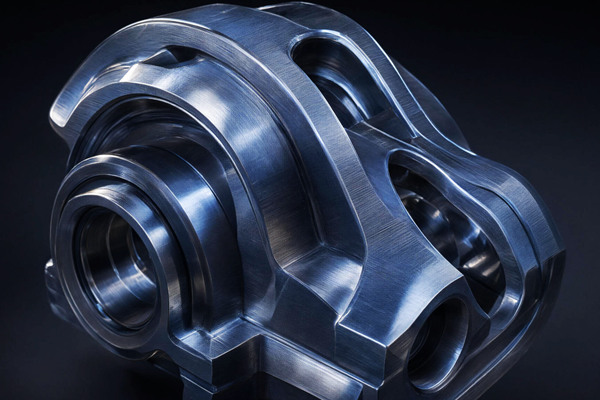
Precision components are produced through several complementary routes. CNC machining—turning, milling, and multi-axis machining—remains the most versatile, capable of producing complex geometries in small to medium volumes with excellent repeatability. Swiss-type lathes excel at long, slender parts such as connector pins and surgical screws. For high-volume production, stamping, fine blanking, and metal injection moulding offer cost advantages while still meeting precision requirements. Additive manufacturing has emerged as a valuable supplement, particularly for intricate internal channels or lightweight lattice structures that conventional machining cannot easily achieve. In practice, many precision components pass through multiple processes—for example, a machined blank that is subsequently ground, honed, or electroplated—to reach final specifications.
Quality Assurance as a Discipline
Because a single out-of-tolerance part can compromise an entire assembly, quality assurance is embedded throughout production rather than appended at the end. Coordinate measuring machines, optical comparators, profilometers, and vision systems verify dimensions and surface characteristics. Statistical process control monitors variation in real time, allowing operators to correct drift before defects occur. Traceability systems record material batches, machine settings, and inspection results, which is essential in regulated sectors such as medical devices and aerospace, where standards like ISO 13485 and AS9100 impose strict documentation requirements.
Applications Across Industries
The reach of precision metal components is remarkably broad. In medical technology, they form the housings, shafts, and cutting edges of surgical instruments and implantable devices. In aerospace, they appear in fuel nozzles, hydraulic fittings, and structural fasteners where failure is unacceptable. Automotive applications include injection components, sensor housings, and transmission parts that contribute to efficiency and emissions control. Consumer electronics rely on precision connectors, heat sinks, and camera module components. Even renewable energy systems depend on precisely machined gears and bearings for wind turbines.
Looking Ahead
Several trends are shaping the future of precision metal components. Automation and robotics are increasing throughput while reducing human error. Digital twins and simulation are shortening design-to-production cycles. Sustainable manufacturing practices are driving interest in near-net-shape processes that minimise material waste, and advanced coatings are extending component life in harsh environments. As products across every sector demand greater efficiency, miniaturisation, and reliability, the demand for precision metal components will only grow.
In conclusion, precision metal components represent the convergence of materials science, mechanical engineering, and disciplined quality management. They are small in scale but large in consequence: the performance of a jet engine, the safety of a surgical procedure, or the durability of an electric vehicle ultimately rests on the accuracy of parts most people will never see. Recognising their role is essential to appreciating how modern engineering achieves the reliability that society takes for granted.




