

The Strategic Value of Product Prototyping Services
In the modern innovation economy, the gap between a promising idea and a commercially viable product is bridged by one critical discipline: prototyping. Product prototyping services have evolved far beyond the creation of simple physical models. Today, they represent an integrated, end-to-end capability that combines industrial design, engineering analysis, rapid manufacturing, and material science to transform abstract concepts into tangible, testable, and production-ready assets. For startups and established enterprises alike, engaging professional prototyping services is no longer a luxury—it is a strategic imperative that de-risks development, accelerates time-to-market, and sharpens competitive advantage.
The Core Functions of Prototyping Services
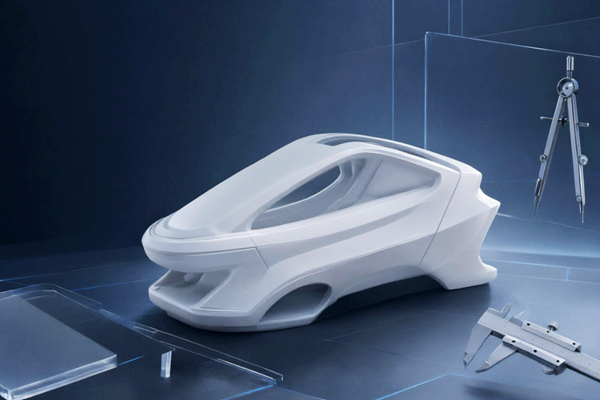
At its foundation, a prototyping service provides the physical and digital tools necessary to validate a design. This begins with conceptual and functional prototypes. A conceptual prototype, often built with lower-fidelity methods such as foam modeling or basic 3D printing, allows designers and stakeholders to evaluate form, ergonomics, and user interaction. A functional prototype, by contrast, is engineered to replicate the performance characteristics of the final product—testing mechanical integrity, electrical conductivity, thermal behavior, or fluid dynamics. Professional service providers employ a spectrum of technologies to achieve this, including CNC machining for precision metal and plastic parts, stereolithography (SLA) and selective laser sintering (SLS) for complex geometries, and urethane casting for small-batch production of rubber-like components.
Beyond the physical object, modern prototyping services encompass digital twin creation and simulation. Finite element analysis (FEA) and computational fluid dynamics (CFD) are used to stress-test designs virtually before a single physical part is cut. This hybrid approach—digital simulation followed by physical validation—dramatically reduces material waste and iteration time, allowing engineering teams to converge on optimal solutions faster.
Why Outsourcing Prototyping Makes Strategic Sense
Maintaining in-house prototyping capabilities is capital-intensive. Industrial-grade 3D printers, CNC mills, injection molding presses, and metrology equipment require significant investment, dedicated floor space, and specialized technicians. For most organizations, particularly startups and small-to-medium enterprises, partnering with a dedicated prototyping service provider offers superior flexibility and cost-efficiency. These providers maintain a broad technology portfolio and can scale resources up or down according to project demands. They also bring cross-industry expertise—a medical device prototype demands different tolerances and material certifications than an automotive housing or a consumer electronics enclosure. A professional service partner has navigated these regulatory and technical landscapes many times before.
Furthermore, outsourcing prototyping introduces objective design-for-manufacturability (DFM) feedback. Internal teams can become attached to design choices that are elegant on screen but problematic in production. An external prototyping partner, with its finger on the pulse of real-world manufacturing constraints, can identify issues such as wall thickness inconsistencies, draft angle deficiencies, or assembly interference early in the process. This candid feedback loop prevents costly tooling rework later in the product development cycle.
The Iterative Advantage: Speed and Learning
The most valuable output of prototyping is not the part itself—it is the knowledge gained. Each prototype iteration answers specific questions: Does the mechanism actuate smoothly? Does the enclosure survive a drop test? Does the thermal management strategy keep components within operating limits? Product prototyping services are structured to support rapid iteration cycles. With technologies like high-speed 3D printing and on-demand CNC machining, a design revision can be turned around in days rather than weeks. This velocity enables a “fail fast, learn faster” methodology, where multiple design variants are tested in parallel, and data-driven decisions replace guesswork.
This iterative capability is especially critical in user-centered design. Functional prototypes allow for real-world usability testing—putting the product in the hands of target users to observe pain points, workflow friction, and unanticipated use cases. Feedback from these sessions often reshapes the product in ways that no amount of internal brainstorming could achieve.
Bridging to Production: From Prototype to Product
A common misconception is that prototyping ends when the design is “finalized.” In reality, the most sophisticated prototyping services include bridge tooling and low-volume production. Bridge tooling—often made from aluminum or hybrid materials—enables the manufacture of hundreds to thousands of parts using production-grade materials and processes. This allows companies to conduct market pilots, secure regulatory approvals, or fulfill initial customer orders while final production tooling is being fabricated. The result is a seamless transition from prototype to market launch, with no costly pauses in momentum.
Conclusion
Product prototyping services are the engine room of hardware innovation. They compress development timelines, reduce financial risk, and inject objective engineering rigor into the creative process. By leveraging specialized expertise, diverse manufacturing technologies, and rapid iteration workflows, organizations can move from a napkin sketch to a market-ready product with confidence. In an era where speed and adaptability define success, investing in professional prototyping is not merely about building a model—it is about building a smarter path to the market.




