

Unlocking Agility in Plastic Prototype Fabrication
In the high-stakes arena of product development, the physical prototype is no longer a mere luxury; it is the indispensable crucible where digital concepts are forged into tangible reality. Among the various materials available, plastic stands out as the most versatile and pragmatic choice for rapid prototyping. The fabrication of plastic prototypes is a sophisticated discipline that marries advanced manufacturing technologies with material science. This article delves into the flexible applicability of plastic prototypes in rapid tooling and emphasizes the critical triumvirate of modern manufacturing: precision accuracy, stringent tolerance control, and exceptional processing efficiency.
The Flexible Applicability of Plastic Prototypes in Rapid Prototyping
The essence of "rapid" in prototyping is not merely about speed but about agility—the capacity to iterate, adapt, and evolve a design with minimal friction. Plastic prototype fabrication offers an unparalleled spectrum of flexibility, serving as a bridge between conceptual Computer-Aided Design (CAD) models and mass production.
One of the primary advantages of plastic prototypes is their ability to mimic the mechanical and thermal properties of production-grade materials. Whether utilizing stereolithography (SLA) for high-detail appearance models or fused deposition modeling (FDM) for functional testing, plastic prototypes allow engineers to evaluate form, fit, and function. For instance, in the consumer electronics industry, a plastic prototype can replicate the tactile feel of a final product, enabling user experience (UX) testing. If a button feels unresponsive or a housing lacks structural rigidity, adjustments are made to the digital file, and a new prototype is fabricated within hours. This agility reduces the time-to-market significantly, allowing companies to test multiple design variations without the prohibitive costs of steel tooling.
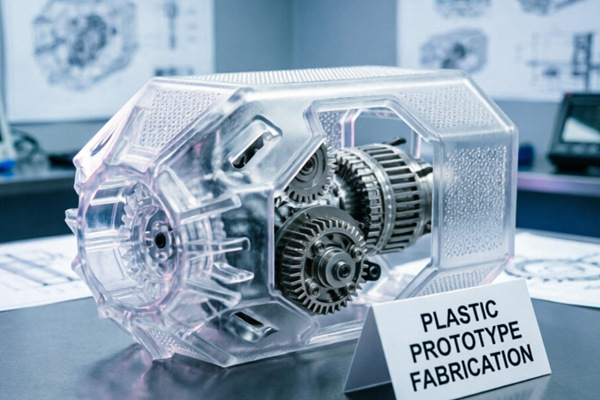
Furthermore, plastic prototype fabrication is highly adaptable to complex geometries. Processes like Selective Laser Sintering (SLS) and Multi-Jet Fusion (MJF) can produce intricate internal channels and undercuts that would be impossible to machine using traditional subtractive methods. This capability is particularly transformative in medical device development, where prototypes must demonstrate fluid flow in drug delivery systems or structural integrity in implantable devices. The material flexibility also supports a range of engineering plastics—from ABS and Polycarbonate for durability to nylon and PEEK for high-temperature resistance. This adaptability ensures that the prototype is not just a representation of the shape, but a true expression of the intended performance.
The Pursuit of Precision: Accuracy and Tolerance Control
While speed and flexibility are vital, the validity of a plastic prototype hinges on its accuracy. A prototype that deviates from its digital blueprint by even a fraction of a millimeter can lead to catastrophic failures in assembly lines or real-world application. In modern plastic prototype fabrication, precision is the non-negotiable baseline.
The industry standard for high-quality plastic prototypes operates within tolerances of ±0.1mm to ±0.05mm, with some advanced systems achieving sub-0.01mm accuracy. This level of precision ensures that when a prototype is snapped together with mating components, it fits perfectly the first time. Consider the automotive industry, where dashboard assemblies consist of dozens of interlocking plastic parts. Tolerance control is critical to prevent noise, vibration, and harshness (NVH) issues. If the edge of a plastic panel is out of specification by 0.2mm, it may create an aesthetic gap that is visible to the customer or a rattle that compromises the brand’s perceived quality.
Achieving such precision in plastic prototype fabrication requires a symbiotic relationship between hardware and software. CNC machining, for example, relies on high-resolution linear scales and precise spindle control to cut plastic blocks to exacting dimensions. Meanwhile, additive manufacturing leverages sophisticated algorithms to account for material shrinkage during cooling. At the calibration stage, experts use coordinate measuring machines (CMM) and optical comparators to map the physical part against the CAD data, performing a meticulous "first-article inspection." This ensures that the prototype serves as a "golden sample" for validation. More importantly, controlling tolerances allows design teams to validate their "Design for Manufacturability" (DFM) strategies early. If a channel cannot be molded within a specified tolerance, this is discovered at the prototype stage rather than during production tooling, saving immense time and capital.
Processing Efficiency: The Heartbeat of Rapid Turnaround
In a global economy driven by first-mover advantage, processing efficiency is the heartbeat of successful product launch. Plastic prototype fabrication processes are optimized for "throughput"—the velocity at which a digital file is transformed into a physical part ready for testing.
The efficiency spectrum is broad and strategic. For early-stage concept models, processes like SLA or FDM can produce a high-quality prototype in as little as 24 hours. This rapid turnaround allows development teams to have "morning concept, afternoon test" cycles. However, for prototypes that require production-grade material properties and surface finishes, CNC machining and injection molding (via rapid tooling) are employed. Modern high-speed CNC machining centers are equipped with automatic tool changers and high-pressure coolant systems that drastically reduce cycle times. A complex plastic housing that once took three days to machine can now be completed in a single shift, thanks to advancements in toolpath optimization.
Processing efficiency also extends to the finishing stages. Unlike metal, plastics are easier to post-process. They can be polished, painted, electroplated, or textured quickly to simulate the final cosmetic finish of the product. For instance, a prototype fabricated for a high-end medical diagnostic tool can undergo a rapid painting process to match the branding color and texture, allowing the marketing team to assess aesthetics while engineering tests the functionality. Additionally, the integration of automated removal systems and nesting algorithms in additive manufacturing ensures that the machine bed is utilized to its maximum capacity, reducing waste and energy consumption per part.
The Balanced Synergy
The true art of plastic prototype fabrication lies in balancing these three pillars: flexibility, precision, and efficiency. It is not a one-size-fits-all approach. A design team might choose the flexibility of SLS for complex geometries, trade some surface finish for the speed of FDM in early iterations, or invest in CNC for the highest precision in a critical test run. The key is the strategic selection of the fabrication process based on the specific phase of development.
For example, a drone manufacturer might use a low-cost, rapid FDM prototype for preliminary weight distribution tests. Once the design is stable, they move to an SLA prototype for wind tunnel testing, which requires ultra-smooth surfaces to ensure accurate aerodynamics. Finally, before tooling, they produce a high-precision CNC prototype that matches the exact dimensions and material of the final injection-molded part to perform drop tests and stress analysis. This linear progression demonstrates how plastic prototype fabrication adapts to the evolving needs of the product lifecycle.
Plastic prototype fabrication has evolved from a simple visualization tool into a high-stakes engineering discipline. Its flexible applicability ensures that designers are never constrained by the manufacturing process, allowing for organic innovation. The rigorous control of precision and tolerances establishes the prototype as a reliable authority for performance validation, bridging the gap between what is drawn and what is durable. Finally, the relentless drive for processing efficiency ensures that time is never a liability in the competitive market.
As materials evolve and machine learning optimizes production parameters, the future of plastic prototype fabrication promises even tighter tolerances and faster turnarounds. For now, it remains the essential cornerstone of rapid product development—a synthesis of speed, precision, and adaptability that enables creators to turn their most complex visions into tangible, testable, and triumphantly successful realities.




