

Optimal Plastic Prototyping Method: A Purpose-Driven Framework for Process Selection
Prototyping is the pivotal stage where design intent meets physical reality. In plastics, the choice of prototyping method influences not only the fidelity of the resulting part but also cost, lead time, and the validity of the feedback the prototype provides. There is no universally "best" method; an optimal approach is one that matches process capability to the specific questions a prototype is meant to answer. This article presents a structured framework for selecting among the principal plastic prototyping methods—CNC machining, 3D printing, urethane casting, and rapid injection molding—and explains how material behavior, geometry, and validation goals should drive the decision.
Define the Prototype's Purpose First
Optimal selection begins with clarifying intent. Prototypes generally serve one or more of four purposes: visual communication, form-and-fit verification, functional testing, and manufacturability validation. A part intended only to confirm aesthetics and ergonomics rarely justifies the cost of production-grade tooling, whereas a part destined for mechanical testing under load demands material properties close to the final specification. Misaligning method and purpose is the most common source of wasted prototyping budget—either overspending on unnecessary fidelity or, more dangerously, drawing conclusions from prototypes that cannot represent the production part.
The Principal Methods and Their Capabilities
CNC machiningremoves material from a solid block, producing prototypes with excellent dimensional accuracy and a wide choice of engineering plastics, including glass-filled grades. It excels at large, simple-to-moderate geometries and tight-tolerance features, and it reproduces the anisotropic behavior of machined stock. Its limitations are cost at low volumes for complex parts and difficulty with deep internal features.
3D printing(material extrusion, resin-based, and powder-bed processes) offers the fastest route from CAD to part and handles intricate internal geometry that machining cannot easily reach. Resin processes deliver fine surface detail and good isotropy, while filament-based processes provide inexpensive functional parts. The caveat is material property mismatch: many printable polymers differ substantially from injection-molding grades in impact strength, fatigue behavior, and temperature resistance, so printed parts are best for form-fit and early functional checks rather than final material validation.
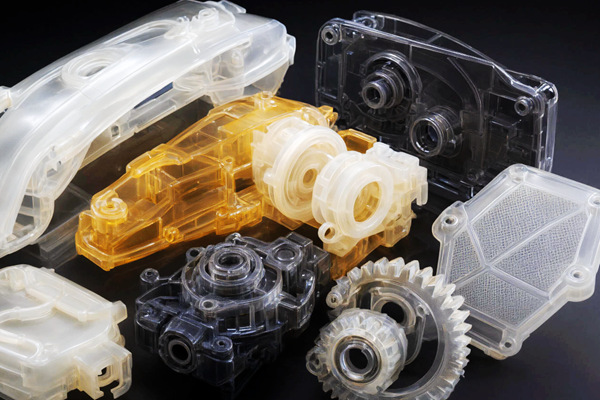
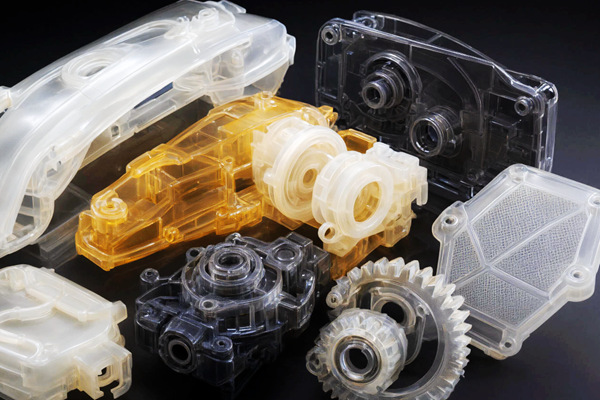
Urethane casting(silicone mold casting) bridges the gap between printing and tooling. A master pattern—often printed—is used to create a silicone mold, from which multiple parts can be cast in polyurethane resins formulated to approximate ABS, polycarbonate, or rubber-like properties. This method suits small batches of ten to fifty parts, delivers good surface finish, and allows material property tuning, though it is labor-intensive and limited in dimensional stability for large parts.
Rapid injection moldinguses aluminum or hybrid tooling to produce parts in the actual production resin. It is the only prototyping route that faithfully reproduces the injection-molding process itself—gate locations, weld lines, shrinkage, and cycle-dependent properties. For design-for-manufacture validation and end-use testing, it is often the definitive choice, at a tooling cost between that of urethane casting and full steel tooling.
A Decision Framework
An effective selection logic proceeds in three filters. First,fidelity requirement: if the prototype must answer manufacturing questions or undergo end-use testing, choose rapid injection molding; if it must merely represent form and fit, printing or machining suffices. Second,quantity and geometry: single complex parts favor printing; large simple parts favor machining; batches of ten to fifty favor urethane casting. Third,material criticality: where mechanical or thermal performance is the test objective, the method must employ the production resin or a validated equivalent, which narrows the field to machining from stock or rapid injection molding.
A practical optimization is often hybrid: print or machine a form-fit prototype early to resolve ergonomic and assembly issues, then invest in rapid injection molding for the validation build. This staged approach concentrates spending where information value is highest.
Conclusion
The optimal plastic prototyping method is not a fixed choice but a function of purpose, quantity, geometry, and material fidelity. By defining what the prototype must prove before selecting a process, teams avoid both overengineering and false confidence. Matching method to question—rather than defaulting to the most familiar process—is the essence of an optimal prototyping strategy.




