

How Custom CNC Machining is Revolutionizing Prototyping Across Industries
In the high-stakes world of product development, the journey from concept to market-ready component is fraught with costly missteps. For decades, prototyping was a bottleneck—a slow, expensive bridge between digital blueprints and physical reality. Today, custom CNC machining has emerged as the gold standard for precision prototyping, offering engineers the ability to test form, fit, and function with production-grade materials long before a single mold is cut. This is not merely about making parts; it is about de-risking innovation.
The Core Advantage: Material Fidelity and Mechanical Integrity
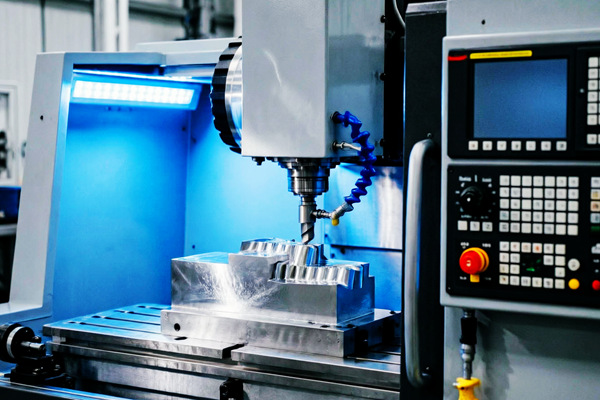
Unlike additive manufacturing, which builds parts layer by layer, CNC machining is subtractive, carving components from solid blocks of material. This distinction is critical for prototyping. When an aerospace engineer tests a turbine blade or an automotive designer validates a suspension knuckle, they need to understand how the part behaves under real stress. Custom CNC machining allows for the use of the exact same alloys, engineering plastics, and composites destined for mass production. There is no compromise on tensile strength, thermal resistance, or fatigue life. This "material fidelity" ensures that mechanical testing data from a prototype is directly translatable to the final product, eliminating the unsettling guesswork that plagues polymer-printed models.
Aerospace: Where Microns Determine Mission Success
In the aerospace sector, the margin for error is measured in microns. Consider the development of hydraulic manifold blocks for landing gear systems. These components require intricate internal channels for fluid flow, with tolerances as tight as±0.0002 inches. Custom CNC machining, utilizing 5-axis milling centers, enables the creation of these complex geometries in a single setup. This not only reduces the risk of misalignment between operations but also produces a prototype with a surface finish that mirrors production standards. For avionics enclosures, where electromagnetic interference (EMI) shielding is paramount, CNC machined prototypes from aluminum or stainless steel provide immediate data on signal integrity and thermal dissipation, allowing engineers to iterate cooling fin designs without waiting weeks for castings.
Medical Devices: Tailoring Solutions for Human Anatomy
The medical device industry presents a unique prototyping challenge: customization. Patient-specific surgical guides, cranial implants, and spinal fixation devices often require unique geometries per case. Custom CNC machining excels here by turning CT scan data into life-saving hardware within hours. For instance, in the development of a new orthopedic drill guide, precision machining ensures that the bushings and locking mechanisms perform flawlessly against sterilized bone. The ability to prototype in titanium or PEEK (polyether ether ketone) allows surgeons to practice complex procedures on accurate models, verifying not just the fit but the tactile feedback of the instruments. This reduces operation time and improves patient outcomes, proving that in medical prototyping, precision is not a luxury—it is a moral imperative.
Automotive: Accelerating the Electrification Transition
As the automotive industry pivots towards electric vehicles (EVs), the demand for lightweight thermal management systems has skyrocketed. Prototyping battery cooling plates, inverter housings, and gearbox casings requires a process that can handle thin walls and complex fin structures. Custom CNC machining offers the versatility to test multiple design variations concurrently. An engineer might machine three different coolant channel geometries from the same 6061 aluminum block and test them on a thermal bench within a single afternoon. This rapid iteration accelerates the optimization of heat exchange efficiency, directly impacting battery range and lifespan. Furthermore, for motorsport and high-performance applications, CNC machined prototypes of suspension uprights or steering racks allow for dynamic testing on test tracks, ensuring that the final forged parts will survive the rigors of competition.
The Critical Role of Surface Finish and Secondary Operations
What truly distinguishes custom CNC machining for prototyping is the holistic approach to manufacturing. It is not just about shape; it is about texture and assembly. Many industrial prototypes undergo secondary anodizing, passivation, or bead-blasting during the machining process to match the final product's aesthetic and corrosion resistance. This allows quality assurance teams to validate color matching and wear characteristics before signing off on tooling. Additionally, the precise thread milling and reaming capabilities of CNC machines ensure that fasteners fit perfectly, allowing for functional assembly of multi-part prototypes. This assembly validation often uncovers clearance issues or tolerance stack-ups that would otherwise remain hidden until the pilot production run.
Future Horizons: Smart Machining and Digital Twins
Looking ahead, the integration of IoT sensors and adaptive toolpaths is making custom CNC machining smarter. During the prototyping phase, machine tools can now monitor cutting forces in real-time and adjust feed rates to compensate for material variances. This "digital twin" technology creates a virtual record of the machining process, linking every cut to the resulting physical properties of the prototype. Consequently, when transitioning to high-volume production, engineers have a robust data set that predicts tool wear and cycle times, bridging the gap between one-off creation and mass manufacture.
In conclusion, custom CNC machining is far more than a prototyping tool; it is a strategic asset for competitive advantage. By providing material integrity, geometric complexity, and unprecedented speed, it empowers industries to push the boundaries of physics and design. Whether it is keeping a satellite in orbit, a heart pumping, or a car cornering at high speed, the precision of these machined prototypes ensures that when we finally commit to production, we do so with absolute certainty. The future of innovation is not drawn—it is machined.




