

Low Volume Metal Parts: A Strategic Capability for Custom Manufacturing
In the landscape of custom manufacturing, the ability to produce low volume metal parts efficiently and accurately has become a defining competitive advantage. Rather than treating small-batch production as a compromise or a temporary phase between prototyping and mass production, forward-thinking manufacturers now recognize it as a distinct discipline with its own methodologies, economics, and strategic value. This article examines low volume metal parts from the perspective of capability building, supply chain design, and long-term business resilience.
Rethinking the Economics of Scale
Traditional manufacturing wisdom holds that unit costs fall as production volume rises. This principle remains true, but it tells only part of the story. For countless applications—industrial automation equipment, medical imaging systems, specialized robotics, aerospace ground support hardware—annual demand may never exceed a few hundred units. In these cases, pursuing mass production economies is not merely unnecessary; it is actively harmful. Tooling investments for injection molding, die casting, or stamping can run into tens or hundreds of thousands of dollars, and those costs must be amortized across a small number of parts, driving unit prices far above what flexible processes would command.
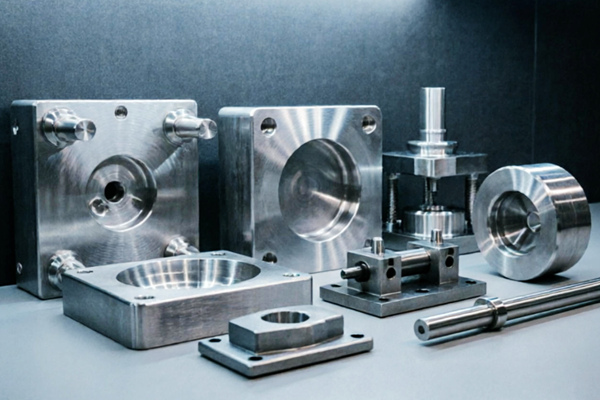
Low volume metal parts manufacturing flips the cost equation. By eliminating or minimizing hard tooling, it shifts the economic burden from fixed capital expenditure to variable operating costs. A machined aluminum bracket produced in a quantity of fifty may cost more per unit than one stamped in a run of fifty thousand, but the total project cost—including tooling, lead time, inventory carrying costs, and design iteration expenses—often favors the low volume approach. This is particularly true in industries where design changes are frequent, product lifecycles are short, or regulatory requirements demand extensive validation before full-scale commitment.
The Supply Chain Dimension
The COVID-19 pandemic exposed the fragility of global supply chains optimized for just-in-time delivery of mass-produced components. Companies that depended on distant suppliers for critical metal parts faced months-long delays, skyrocketing freight costs, and unpredictable quality. In response, many have adopted a dual-sourcing or regional sourcing strategy, with low volume metal parts playing a central role.
Local and regional manufacturing partners capable of producing small batches on short notice provide a buffer against disruption. They enable companies to hold less inventory while maintaining the ability to ramp up quickly if demand surges or a primary supplier falters. This decentralized approach does not eliminate global sourcing, but it introduces redundancy and agility that purely cost-driven models lack. For high-value or safety-critical components, the ability to obtain low volume metal parts domestically—or at least within the same continent—can be worth a modest price premium.
Design Freedom and Iteration
One of the most underappreciated benefits of low volume metal parts is the design freedom they afford. When tooling costs are low or nonexistent, engineers can iterate more freely. A design that performs adequately in simulation may reveal unexpected issues in physical testing; with low volume production, those issues can be addressed through design revisions without scrapping expensive molds or dies. This accelerates the learning curve and reduces the risk of committing to a flawed design at scale.
Moreover, low volume manufacturing enables mass customization. A single production run can include multiple variants of a part—different hole patterns, thicknesses, or finishes—without significant cost penalties. This capability is invaluable for industries such as medical devices, where patient-specific implants and surgical instruments are increasingly common, and for industrial equipment manufacturers who offer configurable products to diverse customers.
Process Selection as a Strategic Decision
Choosing the right process for low volume metal parts is not merely a technical exercise; it is a strategic one. CNC machining offers versatility and precision but may be slower for certain geometries. Sheet metal fabrication excels at enclosures and structural components but is limited in three-dimensional complexity. Additive manufacturing unlocks unprecedented design freedom but requires careful consideration of material properties, surface finish, and post-processing. Casting and forging provide superior material characteristics but involve pattern costs that may not be justified at very low quantities.
The optimal approach often involves hybrid strategies. A part might be rough-machined near-net shape and then finished with CNC operations. Or a casting might be used for the bulk of the geometry, with critical features machined to tolerance. Experienced manufacturing partners can recommend the most cost-effective and reliable combination based on the specific requirements of each project.
Quality Assurance in Small Batches
Quality control for low volume metal parts presents unique challenges. Statistical process control, which relies on large sample sizes, is often impractical. Instead, manufacturers must rely on first-article inspection, in-process verification, and final dimensional checks using coordinate measuring machines (CMMs) or optical comparators. Material certification, heat treatment records, and surface finish measurements must be meticulously documented. For regulated industries, traceability from raw material to finished part is non-negotiable.
Digital tools have made this easier. Manufacturing execution systems (MES) and quality management software can capture inspection data, generate certificates of conformance, and maintain audit trails without burdensome paperwork. When selecting a supplier for low volume metal parts, buyers should inquire not only about machining capabilities but also about quality infrastructure and documentation practices.
Building a Long-Term Partnership
Perhaps the most important factor in successful low volume metal parts sourcing is the relationship between buyer and manufacturer. Unlike commodity purchasing, low volume custom manufacturing involves frequent communication, design feedback, and problem-solving. A supplier who understands the application, anticipates challenges, and proactively suggests improvements is worth far more than one who simply quotes a price.
Companies that treat their low volume manufacturing partners as extensions of their engineering teams—sharing roadmaps, inviting early involvement in design, and providing constructive feedback—consistently achieve better outcomes. These partnerships reduce lead times, improve quality, and lower total costs over the long run.
Conclusion
Low volume metal parts manufacturing is not a stopgap measure or a necessary evil. It is a strategic capability that enables innovation, resilience, and customer responsiveness. By understanding its economics, leveraging its design freedom, selecting processes wisely, and building strong supplier relationships, manufacturers can turn small-batch production into a source of lasting competitive advantage. In an era defined by uncertainty and customization, the ability to produce exactly what is needed, exactly when it is needed, may prove more valuable than the ability to produce at scale.




