

How China's Aluminum CNC Milling Ecosystem Powers Physical Prototype Customization
In the vocabulary of product development, few terms carry as much practical weight as "handboard"—the physical model that transforms a designer's intent into something that can be held, tested, and refined. While 3D printing has captured headlines for its speed, the production of high-fidelity handboards for appearance verification and functional evaluation still relies heavily on CNC milling, particularly of aluminum. China's role in this niche is not merely that of a low-cost supplier; it is an ecosystem that has fundamentally reshaped how prototypes are conceived, iterated, and validated. This article examines the handboard customization landscape through a different lens: the interplay between design translation, material behavior, and the manufacturing culture that has made China the default destination for precision aluminum prototypes.
The Handboard as a Communication Tool
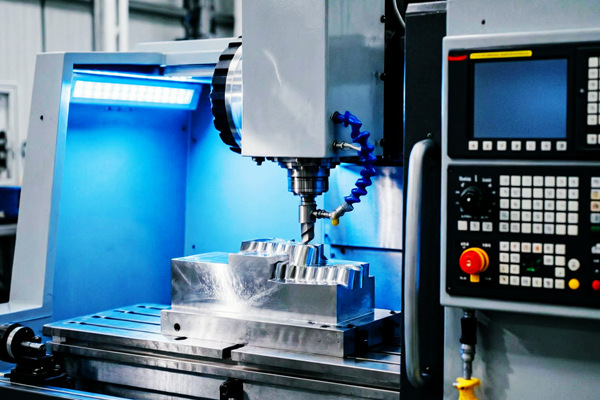
A handboard is more than a sample. In industrial design, it serves as a shared reference point among engineers, marketers, and executives who may not read CAD files fluently. When a design is presented as a rendered image, stakeholders interpret it subjectively; when it is placed in their hands, disagreements collapse into concrete discussions about weight, texture, and ergonomics. This is why handboards are often machined from aluminum rather than printed in resin. Aluminum conveys a sense of solidity and premium quality that plastic cannot replicate. A smartphone handboard milled from 6061 aluminum, then bead-blasted and anodized, feels indistinguishable from a production unit. For automotive interior components, aluminum prototypes can be brushed to simulate brushed metal trim, or painted to match interior color schemes.
The customization aspect is critical. A handboard is rarely a generic shape; it is tailored to a specific product's dimensions, draft angles, and parting lines. Chinese CNC shops have developed expertise in translating industrial design surfaces—often created in Rhino or Alias—into toolpaths that preserve subtle curvature and highlight lines. This requires not just machining skill but a design sensibility. Many suppliers in Shenzhen and Dongguan employ engineers with backgrounds in industrial design, enabling them to flag issues such as overly sharp edges or impossible undercuts before machining begins.
Material Selection Beyond the Default
While 6061 aluminum is the workhorse for handboards, the choice of alloy and temper significantly affects the outcome. 7075 offers higher strength and better machinability for thin walls, making it suitable for handboards with intricate internal structures. 5052 provides superior corrosion resistance and is often chosen for marine or outdoor products. The temper—T6, T651, or annealed—influences both machining stability and post-processing results. Anodizing, for instance, responds differently to different alloys; 6061 anodizes cleanly with a uniform finish, while 7075 may show color variations due to copper content.
Chinese suppliers typically stock a wide range of aluminum grades and thicknesses, allowing rapid turnaround without material delays. This inventory depth is a subtle but powerful advantage. A designer who decides mid-project to switch from 6061 to 7075 for a thinner handboard can often do so without restarting the procurement cycle. The same flexibility applies to finishes: a supplier might offer sandblasting, polishing, laser engraving, and anodizing in-house, enabling a handboard to be finished in multiple variants for A/B testing.
The Speed Equation: Why Lead Time Defines Competitiveness
In rapid prototyping, speed is not a luxury—it is the currency of innovation. Every day saved in the prototype cycle is a day gained for market feedback, design refinement, or early tooling preparation. China's aluminum CNC milling sector has optimized for speed in ways that are difficult to replicate elsewhere. The clustering of suppliers means that a single handboard project can draw on specialized vendors for machining, finishing, and inspection, all within a few kilometers. A part machined in the morning can be anodized in the afternoon and shipped by evening.
This speed is enabled by software and communication infrastructure. Most Chinese prototyping suppliers accept native CAD files and provide DFM feedback within hours. They use cloud-based project management tools that allow customers to track machining progress in real time. For urgent handboards, some factories offer 24-hour turnaround, with machinists working in shifts and 5-axis machines running unattended overnight. The result is a compressed timeline that would be unthinkable in many Western in-house machine shops, where scheduling conflicts and limited capacity often push lead times to weeks.
Quality Assurance as a Collaborative Process
One misconception about Chinese CNC prototyping is that quality is inconsistent. In reality, the leading suppliers have adopted quality management systems that rival those of large manufacturers. For handboards, dimensional accuracy is verified with CMMs, and surface finish is inspected under controlled lighting. But quality in handboard production also has a subjective dimension: does the part feel right? Does the anodized color match the Pantone reference? Does the edge break feel comfortable in the hand?
Forward-thinking Chinese suppliers address this by involving the customer in the quality loop. They send photographs of the machined part before finishing, allowing the designer to approve the geometry. They provide color swatches for anodizing. They may even ship a "first article" handboard for approval before producing additional units. This collaborative approach transforms quality assurance from a gatekeeping function into a partnership, reducing the risk of costly misunderstandings.
The Strategic Implications for Global Product Teams
For product teams outside China, the decision to source aluminum CNC handboards from Chinese suppliers is not merely tactical—it is strategic. It allows them to iterate more frequently, test more design variants, and gather user feedback earlier in the development cycle. It also frees internal engineering resources to focus on system-level integration rather than machining logistics. The most sophisticated teams treat their Chinese prototyping partners as extensions of their own R&D departments, sharing roadmaps and involving suppliers in early concept discussions.
This relationship-based model contrasts with the transactional approach that characterized early offshore sourcing. Today, the best Chinese suppliers offer design consultation, material recommendations, and even small-batch production to bridge the gap between prototype and mass manufacturing. For handboard projects, this means a single partner can deliver a machined, finished, and assembled prototype that is ready for executive review or trade show display.
Conclusion
The story of China aluminum CNC milling parts for physical prototype customization is ultimately a story about removing friction from the creative process. By combining material versatility, machining precision, rapid turnaround, and collaborative quality practices, Chinese suppliers have created an environment where design intent can be expressed physically with minimal delay. For global product teams, understanding and leveraging this ecosystem is not just about cost savings—it is about gaining the speed and flexibility needed to compete in markets where consumer expectations evolve faster than ever. The handboard, once a static model, has become a dynamic tool for innovation, and China's CNC milling ecosystem is the engine that drives it.




