

How Low-Volume Manufacturers Power Automotive Concept Validation
In the high-stakes world of automotive innovation, the journey from a sleek digital render to a road-ready vehicle is fraught with engineering challenges. While much of the spotlight falls on major Original Equipment Manufacturers (OEMs) and their grand assembly lines, there is an unsung hero quietly driving the early stages of this process: the low-volume auto manufacturer. Far from being just a niche player for boutique car brands, these agile manufacturers play an irreplaceable role in bridging the gap between theoretical design and physical reality during the concept prototype validation phase.
Beyond the Assembly Line: What is Low-Volume Manufacturing?
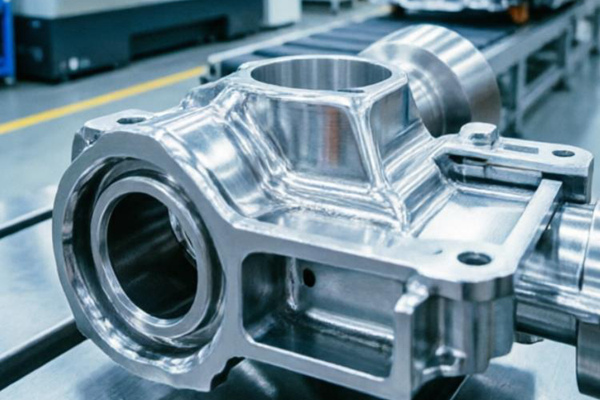
Low-volume manufacturing typically refers to the production of limited quantities of parts or vehicles—ranging from just a handful to several thousand units. Unlike traditional mass production, which relies on expensive, rigid tooling and economies of scale, low-volume manufacturing thrives on flexibility. It leverages advanced techniques such as CNC machining, 3D printing (additive manufacturing), vacuum casting, and rapid tooling to deliver high-quality components without the massive upfront investment of stamping dies or injection molds.
For automakers, this approach is not merely an alternative; it is a strategic necessity during the concept stage. Before committing hundreds of millions of dollars to a full-scale factory launch, engineers must answer critical questions: Does the aerodynamics hold up in the real world? Do the new battery housing materials dissipate heat effectively? Is the interior ergonomics intuitive for the driver? Low-volume manufacturers provide the physical answers to these questions.
Accelerating the Feedback Loop
One of the most significant contributions of low-volume manufacturing is speed. In an era where vehicle development cycles are shrinking, waiting months for hard tooling can kill a project's momentum. Low-volume partners allow automotive engineers to iterate rapidly.
For instance, if a concept car’s front bumper design needs tweaking for better airflow, a low-volume manufacturer can use industrial-grade 3D printing to produce a functional prototype in days rather than weeks. This allows designers to test fitment, aesthetics, and even structural integrity almost immediately. If the design fails the test, the digital model is adjusted, and a new version is printed. This "fail fast, learn faster" methodology ensures that by the time a design reaches mass production, it has been rigorously vetted and optimized.
Risk Mitigation and Cost Efficiency
Launching a new vehicle model is inherently risky. Consumer preferences shift, and regulatory standards evolve. Low-volume manufacturing acts as a financial safety net. By producing a small batch of concept prototypes—say, 50 to 500 units—automakers can test market reactions and validate technical assumptions without betting the entire company budget.
Consider the validation of new materials. An automaker might want to switch from steel to a specialized carbon-fiber-reinforced polymer to reduce weight. A low-volume manufacturer can fabricate these complex composite parts using flexible molds or additive processes. This allows the engineering team to subject the materials to real-world stress tests—vibration, thermal cycling, and impact—before investing in the costly infrastructure required for mass production. If the material underperforms, the financial loss is minimal compared to retooling a massive assembly plant.
Enabling Complex and Customized Geometries
Modern automotive concepts are pushing the boundaries of geometry, featuring organic shapes and intricate internal structures that traditional manufacturing struggles to replicate. Low-volume manufacturers excel here. Technologies like Selective Laser Sintering (SLS) or Direct Metal Laser Sintering (DMLS) can create lightweight lattice structures inside a chassis component that would be impossible to cast or machine traditionally.
This capability is vital for the burgeoning Electric Vehicle (EV) sector. EV startups often lack the legacy infrastructure of established giants. They rely heavily on low-volume manufacturing to build their initial validation fleets. These prototypes need to house complex battery packs, sophisticated sensor arrays for autonomous driving, and unique thermal management systems. Low-volume partners provide the bespoke fabrication services necessary to assemble these one-off or limited-run vehicles, ensuring that innovative designs aren't compromised by manufacturing limitations.
The Bridge to Mass Production
Ultimately, the role of the low-volume manufacturer is that of a bridge. They facilitate the transition from the "engineering prototype" phase—where things are rough and functional—to the "production validation" phase, where the focus shifts to consistency and assembly line readiness.
By handling the initial heavy lifting of concept validation, they allow major automakers to refine their supply chains, finalize their Bill of Materials (BOM), and perfect their assembly procedures. When the vehicle finally hits the mass-production line, the design is mature, the risks are mitigated, and the engineering flaws have been ironed out.
In conclusion, low-volume auto manufacturers are not just making "small batches"; they are enabling the very possibility of modern automotive innovation. Their ability to combine speed, flexibility, and advanced technology makes them indispensable partners in turning bold automotive concepts into validated, reliable realities. As the industry moves toward more personalized, electric, and autonomous futures, the importance of this agile manufacturing tier will only continue to grow.




