

Why Vacuum Mold Casting is Indispensable for Medical Equipment Shells
The development of medical equipment is a high-stakes endeavor where precision, safety, and aesthetics converge. When engineers design a new diagnostic machine, surgical robot, or portable patient monitor, the frame shell is far more than a mere cosmetic cover. It serves as the critical structural backbone, the electromagnetic shield, and the primary interface for both the operator and the patient. While 3D printing has revolutionized early-stage prototyping, transitioning to functional validation and small-batch production requires a different level of fidelity. This is where vacuum mold casting (also known as urethane casting or silicone molding) becomes an absolute necessity in the medical device lifecycle.
The Limitations of Early Prototyping
In the initial phases of medical device design, engineers often rely on 3D printing to quickly visualize form and fit. However, standard 3D-printed plastics rarely replicate the mechanical strength, chemical resistance, or surface finish of the final production-grade thermoplastics (like ABS, PC, or medical-grade polyurethanes).
When a medical shell undergoes rigorous validation—such as drop testing, sterilization cycles, or biocompatibility assessments—3D-printed parts often fail prematurely due to layer lines or material brittleness. Vacuum mold casting bridges this gap. By utilizing a high-quality master model to create a flexible silicone mold, engineers can cast parts using liquid polyurethane resins that perfectly mimic the mechanical, thermal, and chemical properties of injection-molded plastics. This ensures that the prototype tested in the lab is virtually identical to the mass-produced unit.
Achieving Clinical-Grade Aesthetics and Ergonomics
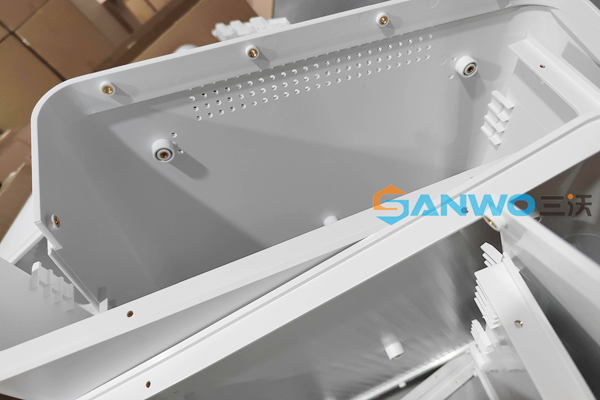
In the medical field, design dictates trust. A bulky, rough-looking device can subconsciously signal inferior technology to healthcare professionals and patients. Vacuum casting excels at capturing microscopic details from the master model, resulting in parts with exceptionally smooth, Class-A surface finishes right out of the mold.
Furthermore, medical equipment requires complex ergonomic features, such as soft-touch grips, seamless button integrations, and precise mating surfaces. The vacuum environment during the casting process pulls the liquid resin into the most intricate cavities while simultaneously removing trapped air. This virtually eliminates internal bubbles and surface defects, ensuring the shell is not only aesthetically flawless but also structurally sound and capable of meeting strict Ingress Protection (IP) ratings for dust and fluid resistance.
Navigating Regulatory Validation and Market Testing
Before a medical device can receive regulatory clearance (such as FDA approval or CE marking), manufacturers must conduct exhaustive clinical trials and usability testing. These trials often require dozens, sometimes hundreds, of fully functional devices.
Traditional steel injection molding is financially unviable at this stage, with tooling costs ranging from tens to hundreds of thousands of dollars. Vacuum mold casting offers a highly cost-effective alternative. Silicone molds are significantly cheaper and can be produced in a fraction of the time. While a single silicone mold may only yield 20 to 50 parts before degrading, this volume is perfectly tailored for clinical validation batches, investor demonstrations, and early market testing. If a design flaw is discovered during clinical trials, the cost of modifying a master model and creating a new silicone mold is a fraction of retooling a steel mold.
Material Versatility for Specialized Medical Needs
Medical shells often require specialized material properties. Vacuum casting provides unparalleled flexibility in material selection. Engineers can choose from a vast array of custom polyurethane resins tailored to specific medical requirements. Need a shell that can withstand repeated autoclave sterilization? High-temperature resins are available. Require an enclosure that prevents electromagnetic interference (EMI) from sensitive internal sensors? Conductive resins filled with metal powders can be vacuum cast to provide excellent shielding. Additionally, for devices that come into direct contact with patients, biocompatible resins can be utilized to ensure safety and compliance.
The Economics of Validation: Understanding Vacuum Casting Costs
For medical device companies managing tight R&D budgets, understanding the cost structure of vacuum casting is crucial for strategic planning. Unlike traditional manufacturing, vacuum casting pricing is highly transparent and predictable, primarily driven by three factors: mold creation, material selection, and production volume.
Typically, the initial investment for a silicone mold ranges from $200 to $1,000, depending on the shell's size and geometric complexity. This is a fraction of the $5,000 to $100,000+ required for steel injection molds. The per-unit cost of the cast parts generally falls between $10 and $100, heavily influenced by the choice of resin and any required post-processing, such as painting or texture finishing. Because silicone molds have a limited lifespan of 20 to 50 parts, the initial tooling cost is amortized over a smaller batch. However, this makes vacuum casting exceptionally economical for the 50–500 unit range typical of medical validation. By avoiding the massive upfront capital expenditure of hard tooling, companies can preserve cash flow and allocate funds toward critical clinical trials and regulatory testing.
Conclusion
In the highly regulated and unforgiving landscape of medical device manufacturing, cutting corners during the validation phase is not an option. Vacuum mold casting serves as the indispensable bridge between digital design and mass production. By providing high-fidelity, structurally robust, and aesthetically flawless shells at a fraction of the cost of traditional tooling, it empowers medical engineers to validate designs with confidence. Ultimately, this agile manufacturing process not only accelerates time-to-market but also ensures that the final medical equipment is safe, reliable, and ready for the critical environments in which it will be used.




