

Why CNC Prototyping Defines the Next Generation of Electronics
In the race to launch the next breakthrough in consumer electronics, much of the spotlight falls on processors, display resolutions, and battery life. But beneath that glossy exterior lies a quiet, often overlooked enforcer of feasibility: the CNC prototyping project. For electronics like VR glasses, where millimeters dictate comfort and microns determine optical alignment, CNC machining isn't just a prototyping tool—it is the difference between a concept that dazzles on a render and a product that survives human physiology.
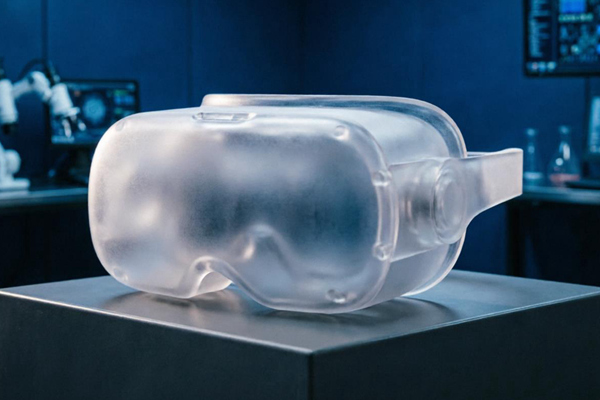
Let’s talk about VR glasses housing. A typical VR headset houses lenses, sensors, cooling systems, and a rigid battery frame—all within a shell that wraps around the user’s face. The housing must be lightweight yet stiff, thermally stable yet comfortable against skin, and precise enough to hold dual lenses within 0.05mm of optical center. Injection molding cannot deliver this precision in the first iteration. Additive manufacturing (3D printing) often lacks the material consistency for drop-test simulations or screw-boss validation. CNC prototyping, however, bridges that gap with unapologetic mechanical truth.
Why CNC prototyping is non-negotiable for VR housing
The first reason is dimensional fidelity. A VR glasses housing has multiple mounting points: for the display panels, the interpupillary distance (IPD) adjustment mechanism, the nose bridge, and the fan assembly. CNC machined prototypes can hold tolerances of±0.01mm, allowing engineers to validate not just fit but also the feel of assembly—how a metal insert snaps, how a plastic clip flexes. Try that with a sintered nylon part, and you’ll chase ghost gaps.
Second, functional testing requires real material behavior. You cannot test thermal dissipation of a polycarbonate housing using a photopolymer resin print. The thermal conductivity, creep under screw load, and impact resistance of CNC-machined materials mirror production-grade plastics or aluminum. For VR glasses, where a housing might soak up heat from both the processor and the user’s face, material truth is non-negotiable.
Third, iterative speed. A good CNC prototyping project for VR housing can turn around five design revisions in two weeks—each with real fasteners, real surface finish, and real thread inserts. This is not about“looks-like”models; it’s about“works-like”validation.
The material dilemma:Between weight, strength, and user comfort
Choosing the right material for a VR housing prototype is a balancing act between engineering and ergonomics. Common routes include:
Aluminum 6061-T6: Great for structural frames and heat dissipation inserts. CNC machining aluminum yields excellent surface detail, but the raw material feels cold and hard against the face. For a full housing, it’s too heavy (2.7 g/cm³) unless skeletonized—which introduces stress risers.
Polycarbonate (PC): Mid-weight, tough, and machinable with sharp cutters. PC is ideal for drop-test prototypes because it behaves like production plastic. However, it scratches easily and can show tool marks. Post-processing (vapor smoothing or bead blasting) is often required to simulate a polished shell.
ABS: Easier to machine than PC, lower cost, and good for quick ergonomic prototypes. But ABS absorbs moisture, warps under heat, and lacks the stiffness needed for lens mounts. Use it for outer shells, not optical benches.
PEEK (Polyether ether ketone): The overachiever. High heat deflection, chemical resistance, and dimensional stability. But PEEK is abrasive to cutters, expensive, and overkill unless your VR housing must survive sterilization or industrial heat. Generally unnecessary for consumer VR.
For the VR glasses housing that needs to feel like a final product, CNC machined PC or glass-filled nylon often wins. The glass fill (typically 15–30%) increases stiffness for thin-wall sections (1.2mm common in VR bridges) but accelerates tool wear and leaves a fibrous surface that requires careful post-processing.
Post-processing pitfalls (and how to manage them)
A raw CNC machined part is honest but unfinished. In VR glasses, users touch the housing constantly, so surface quality matters. Here’s where projects derail:
Tool mark removal on complex curves: The bridge of VR glasses often has compound contours. Removing tool marks without losing critical radii requires manual finishing or CNC polishing. Over-aggressive sanding changes the snap-fit geometry. Solution: use 3D scallop toolpaths and leave 0.05mm for final hand-finishing.
Texture matching to injection molding: A smooth CNC surface reflects light differently than a molded part. To simulate the final matte or soft-touch finish, many teams apply spray painting, but paint adds thickness (0.02–0.05mm), which can close vent gaps or increase screw boss interference. Better approach: bead blasting with fine glass beads at low pressure, followed by vapor smoothing for plastics.
Threading and inserts: VR housings often require self-tapping screws into plastic bosses. A CNC prototype can feature machined threads, but production will use heat-set brass inserts. Testing with machined threads gives false torque feedback. Solution: manually install the actual production inserts into the CNC prototype using a soldering iron—time-consuming but critical for assembly validation.
Gloss and anti-reflection: Internal surfaces of VR housing must be matte black to prevent stray light reflections. CNC machined black plastic (e.g., acetyl or static-dissipative PC) often has a slightly reflective swarf pattern. Use dry ice blasting or apply a low-VOC matte lacquer without filling the logos.
The cost of skipping CNC truth
I have seen teams jump from 3D-printed concept directly to soft tooling for a VR glasses housing. The result: expensive mold modifications when the snap hooks interfered with the LCD flex cable routing, or when the IPD slider felt gritty because the molded draft angle changed the slot clearance. A CNC prototyping project would have caught those issues for $3,000 and two weeks—instead of $30,000 and six weeks of tool rework.
In consumer electronics, especially wearable products that interact with human geometry, there is no substitute for machined truth. CNC prototyping for VR glasses housing is not about making pretty show models. It is about understanding, before any steel is cut for molds, how materials will behave under real loads, real heat, and real human hands.
So next time you see a sleek VR headset launch, remember: the reason it doesn’t pinch your nose or drift out of focus is not just clever optics. It is the CNC prototyping project that failed early, failed often, and finally got the material, the finish, and the tolerances right. That is the hidden backbone of innovation.




