

Choosing the Right Vacuum Casting Prototype Manufacturer Defines Your Product’s Future
The bridge between a single 3D-printed prototype and mass production is a manufacturing process that is often misunderstood—vacuum casting. However, the success of this process does not rely solely on the machinery or the silicone molds. It relies almost entirely on the expertise of the vacuum casting prototype manufacturer you choose to partner with.
If you are currently searching for a manufacturing partner to handle your low-volume, high-quality production needs, here is why the decision goes far beyond just comparing price quotes.
The Misunderstood Power of Vacuum Casting
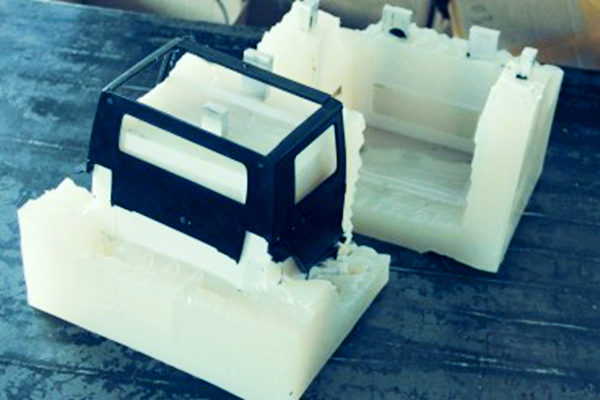
Vacuum casting is often pigeonholed as simply a “rapid prototyping” tool. In reality, it is one of the most sophisticated manufacturing techniques for bridge production. The process involves creating a silicone mold from a master pattern (usually CNC machined or 3D printed) and then casting polyurethane resins under vacuum to replicate the part.
When executed correctly, vacuum casting produces parts that are nearly indistinguishable from injection-molded production parts. They can replicate complex textures, undercuts, and even incorporate over-molding for soft-touch surfaces.
But here is the catch: the gap between a part that looks good and a part that performs well is where inferior manufacturers falter.
What Defines a Superior Vacuum Casting Prototype Manufacturer?
To ensure your product survives functional testing and market validation, you need to look for specific qualities in a manufacturing partner.
1. Material Science Expertise
Standard prototyping shops will simply pour the cheapest polyurethane available into the mold. A premium vacuum casting prototype manufacturer acts as a material consultant.
Polyurethanes are not a one-size-fits-all solution. They range from ABS-like rigid materials to rubber-like elastomers (TPE) and high-temperature-resistant variants. A skilled manufacturer will ask you the right questions:Will this part be exposed to UV light? Does it need to flex repeatedly? Is this a snap-fit mechanism?
The ability to select the correct Shore hardness and material properties ensures that your prototype doesn’t just look like the final product—it behaves like it.
2. Mastering the “Master Pattern”
The quality of a vacuum casting run is directly proportional to the quality of the master pattern. This is the original part used to create the silicone mold.
If a manufacturer uses a low-resolution 3D printed pattern with visible layer lines, those imperfections will transfer to every single casted part. A reputable manufacturer will invest time in post-processing the master pattern—sanding, polishing, and applying surface finishes—before the mold is ever poured. This meticulous preparation is what separates a high-end aesthetic model from a mediocre shop-floor prototype.
3. Precision Over Quantity
One of the greatest strengths of vacuum casting is the ability to produce 10 to 20 high-quality parts from a single silicone mold. However, some manufacturers focus on quantity over precision, rushing the de-gassing process or using improper clamp pressures.
A top-tier vacuum casting prototype manufacturer prioritizes precision. They utilize advanced vacuum systems to eliminate bubbles that cause pinholes or structural weaknesses. They understand that in low-volume production, every part must count, as these units often go directly to investors, test markets, or clinical trials.
When to Choose Vacuum Casting Over CNC or 3D Printing
A common question among product developers is when to switch from additive manufacturing (3D printing) to vacuum casting. The answer lies in the purpose of the parts.
· 3D Printing (SLA/SLS): Best for form verification and single concept models.
· CNC Machining: Ideal for structural components requiring specific engineering-grade thermoplastics (like ABS or POM) in very low quantities.
· Vacuum Casting: The gold standard for functional aesthetics. If you need 5 to 50 units that look like production parts, have specific color matching (Pantone or RAL), and require mechanical properties close to injection molding, vacuum casting is unmatched.
Furthermore, vacuum casting is significantly more cost-effective than CNC machining for complex geometries that would require extensive machine setup and labor.
Reducing Risk in the Production Cycle
Perhaps the most valuable service a skilled vacuum casting provider offers is risk mitigation. In the traditional manufacturing timeline, discovering a design flaw during injection molding tooling can cost tens of thousands of dollars and months of delays.
By utilizing vacuum casting for low-volume production first, companies can:
· Conduct real-world user testing without the cost of hard tooling.
· Identify assembly issues before committing to steel molds.
· Validate market demand with limited financial exposure.
Essentially, a qualified vacuum casting prototype manufacturer acts as a safety net, allowing you to fail fast and cheap—or better yet, succeed elegantly—before you scale.
Sanwo Rapid Approach to Vacuum Casting
At Sanwo Rapid, we view vacuum casting not just as a process, but as a collaborative engineering service. We understand that for many of our clients, these low-volume runs represent their first impression with the market.
We distinguish ourselves through:
· Surface Finish Excellence: We utilize automotive-grade surface treatment techniques to ensure your casted parts match the intended finish, whether that’s a high-gloss automotive panel or a soft-touch medical device.
· Structural Integrity: We use only high-grade silicone and fully degassed polyurethanes to ensure no internal voids compromise the strength of your parts.
· Scalability Support: We look beyond the vacuum casting mold. We analyze your design with an eye toward future injection molding, providing design for manufacturability (DFM) feedback that smoothens the transition to mass production.
Conclusion
In the world of hardware startups and advanced engineering, your prototype is often the only asset you have to secure funding, close sales, or validate a patent. Entrusting this critical phase to a generic service bureau can lead to warped parts, mismatched colors, and missed deadlines.
Choosing the right vacuum casting prototype manufacturer means choosing a partner who understands the chemistry of polyurethanes, the art of surface finishing, and the urgency of your timeline. It means ensuring that your "small batch" production looks anything but small.
Whether you are developing consumer electronics, automotive components, or medical devices, the quality of your vacuum casting partner will be reflected in the quality of your product. Do not settle for parts that are merely "good enough." Aim for parts that are ready for the spotlight.
Ready to bridge the gap between prototyping and production with precision? Contact Sanwo Rapid today to discuss how our vacuum casting expertise can bring your next project to life.




