

Stainless Steel CNC Machining Services Are Essential for Precision Manufacturing
Stainless steel remains one of the most widely used materials in modern engineering. From medical devices to aerospace components, its strength, corrosion resistance, and longevity make it a top choice for demanding applications. However, working with stainless steel is not straightforward. That’s where stainless steel CNC machining services come into play. These services combine advanced automation with material expertise to deliver high-precision parts that meet strict industrial standards.
The Unique Challenges of Machining Stainless Steel
Unlike softer metals such as aluminum or brass, stainless steel presents several machining difficulties. Its high tensile strength means it resists cutting, while its work-hardening tendency can quickly dull standard tools. Additionally, stainless steel dissipates heat poorly, leading to thermal damage if not managed correctly. For these reasons, not every machine shop can deliver consistent results with stainless steel. Specialized stainless steel CNC machining services invest in rigid CNC equipment, carbide tooling, and advanced cooling systems to overcome these challenges efficiently.
Key Processes Within Stainless Steel CNC Machining
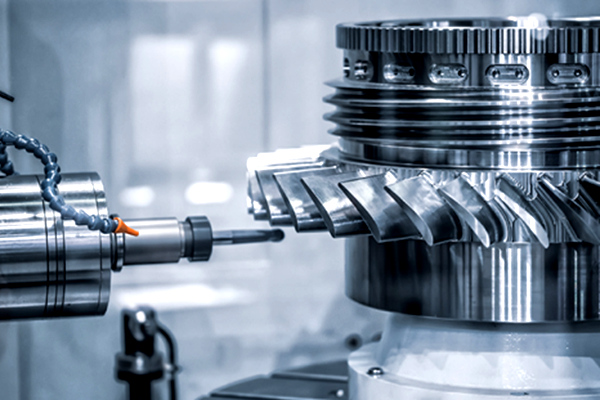
Professional stainless steel CNC machining services typically offer a range of complementary processes. CNC milling handles complex 3D shapes, slots, and pockets. CNC turning produces cylindrical parts like shafts and fittings. For parts requiring both processes, multi-axis turn-mill centers complete components in a single setup, improving accuracy and reducing lead times. Many advanced providers also integrate wire EDM or laser cutting for intricate features that traditional cutting tools cannot easily achieve. By combining these methods, manufacturers can produce anything from surgical tools to heavy-duty pump housings.
Selecting the Right Grade of Stainless Steel
A critical advantage of professional stainless steel CNC machining services is their ability to recommend and work with the optimal grade for your application. Common choices include 304 for general-purpose corrosion resistance, 316 for marine or chemical environments, 17-4 PH for high strength with precipitation hardening, and 303 for improved machinability. Each grade behaves differently under cutting tools. Experienced service providers adjust feed rates, spindle speeds, and toolpaths to match the specific alloy, ensuring surface finish quality and dimensional stability.
Quality Assurance and Surface Finishes
Precision alone is not enough. End users rely on stainless steel CNC machining services to deliver parts that pass rigorous inspections. Typical quality controls include coordinate measuring machines (CMM), optical comparators, and bore gauges. Many shops are certified to ISO 9001 or AS9100 for aerospace and medical work. After machining, parts may require secondary finishes such as passivation (removing free iron), electropolishing (enhancing corrosion resistance), or bead blasting (achieving uniform matte appearance). These steps ensure both functionality and aesthetic consistency.
Cost Factors and Lead Time Optimization
One common misconception is that stainless steel CNC machining services are always expensive. While the material and tooling costs are higher than for plastics or mild steel, long-term value often justifies the investment. Durable stainless steel parts reduce replacement frequency and downtime. To control costs, smart buyers design parts with standard tool sizes, avoid unnecessary tight tolerances, and combine features to reduce setups. Many service providers also offer design for manufacturability (DFM) feedback to lower machining complexity without compromising performance. For prototyping, some shops use accelerated processes to deliver samples in days rather than weeks.
Future Trends: Automation and Sustainable Machining
The field of stainless steel CNC machining services is evolving rapidly. Automated tool changers, robotic part loading, and in-process monitoring systems are increasing throughput while reducing human error. Meanwhile, sustainability is gaining attention. New minimum quantity lubrication (MQL) systems reduce coolant waste, and high-efficiency milling strategies lower energy consumption per part. These innovations make high-quality stainless steel components more accessible and environmentally responsible.
Final Thoughts
Whether you need a single prototype or high-volume production, partnering with experienced stainless steel CNC machining services ensures your parts perform reliably under real-world conditions. The combination of material knowledge, precision equipment, and quality systems separates capable suppliers from general machine shops. By understanding your grade requirements, design constraints, and finish needs, you can turn a challenging material into a competitive advantage. Choose your machining partner wisely—the strength of your final product depends on it.




