

Custom Prototype Machining for Medical Devices in the Rapid Manufacturing Era
The medical device industry operates at a unique intersection of innovation and regulation. Every catheter tip, surgical guide, or implantable housing must satisfy not only functional requirements but also biocompatibility standards, sterilization protocols, and traceability mandates. In this environment, the journey from concept to clinical reality depends heavily on one often-underappreciated discipline: custom prototype machining. As rapid manufacturing techniques mature, they are reshaping how medical device prototypes are designed, fabricated, and validated.
Why Prototypes Matter More in Medicine
Unlike consumer electronics, where a flawed prototype may simply lead to a product recall, medical device prototypes carry direct implications for patient safety and regulatory clearance. A prototype serves multiple masters. It must demonstrate design intent to engineers, provide tangible samples for clinician feedback, supply test articles for bench and animal studies, and eventually support regulatory submissions. Each of these purposes imposes distinct requirements on materials, tolerances, and surface finishes.
Consequently, medical device prototyping is rarely a single iteration. It is an iterative dialogue between design assumptions and physical reality, where machining plays a central role in translating digital models into functional hardware.
The Rise of Rapid Manufacturing in Prototyping
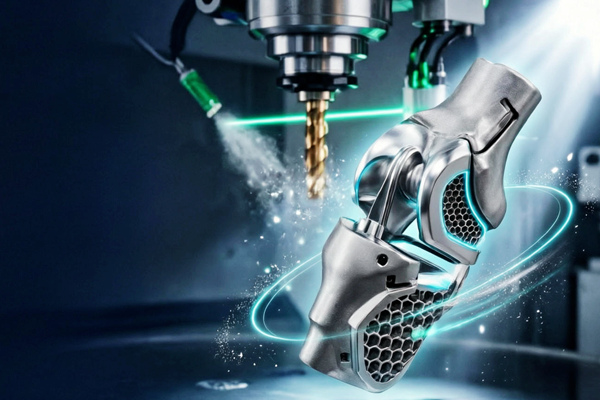
Rapid manufacturing—encompassing CNC machining, additive manufacturing, and hybrid processes—has compressed prototype lead times from weeks to days. For medical device developers, this speed is not a luxury; it is a strategic advantage. Faster iterations mean more design cycles before locking a specification, which in turn reduces the risk of costly late-stage changes.
CNC machining remains the workhorse for functional prototypes. It offers material versatility, from biocompatible polymers like PEEK and PEI to medical-grade stainless steels and titanium alloys. It also delivers the dimensional accuracy and surface quality that many medical applications demand. Additive manufacturing complements this by enabling complex geometries—lattice structures, internal channels, patient-specific anatomies—that would be difficult or impossible to machine conventionally.
The most effective prototyping strategies often combine both. A 3D-printed anatomical model may guide a surgeon’s feedback, while a CNC-machined version of the same device is used for mechanical testing. This hybrid approach leverages the strengths of each process while mitigating their limitations.
Material Considerations and Biocompatibility
Material selection in medical device machining is never arbitrary. A prototype intended for short-term bench testing may use a general-purpose polymer, but one destined for clinical evaluation must use materials with established biocompatibility profiles. ISO 10993 standards govern the biological evaluation of medical devices, and prototype materials should be chosen with these requirements in mind.
Machining parameters also matter. Heat generated during cutting can alter polymer crystallinity or introduce surface defects that affect cell response. For metals, tool wear and coolant residue can influence corrosion resistance and cleanliness. Experienced prototype machinists understand that medical devices demand more than just geometric accuracy—they require process control that preserves material integrity.
Tolerances, Finishes, and Functional Testing
Medical device prototypes often push machining tolerances to their limits. A microfluidic component may require channel dimensions within a few micrometers. A bone screw must match thread geometry precisely to ensure reliable fixation. A surgical instrument’s mating surfaces must fit without play yet disassemble for cleaning.
Surface finish is equally critical. Rough surfaces can harbor bacteria, impede fluid flow, or cause tissue irritation. Polishing, bead blasting, and electropolishing are common post-machining steps, each with its own effect on dimension and material properties. Prototype manufacturers must balance these finishing operations against the need to maintain tolerances.
Functional testing closes the loop. Prototypes are subjected to leak tests, fatigue cycles, torque measurements, and simulated use conditions. The data generated informs the next design iteration and, ultimately, the design history file that regulators will review.
The Regulatory Dimension
In the United States, the FDA’s Quality System Regulation and the European MDR impose rigorous documentation requirements. Prototype machining is not exempt. Design controls, traceability of materials, and records of process parameters all apply, even at the prototype stage. This means that a rapid manufacturing partner for medical devices must be more than a machine shop; it must be a compliant, auditable extension of the developer’s quality system.
Conclusion
Custom prototype machining for medical devices is a discipline where speed meets scrutiny. Rapid manufacturing has shortened iteration cycles, but it has not reduced the need for precision, material integrity, and regulatory rigor. As medical technology advances toward smaller, smarter, and more personalized devices, the ability to machine functional prototypes quickly and reliably will remain a cornerstone of successful product development. The companies that master this balance—speed without compromise, innovation without ignoring compliance—will be the ones that bring safer, more effective devices to patients faster.




