

Mastering Low Volume Production Sheet Metal: A Strategic Guide for Modern Manufacturers
In an era defined by rapid innovation and market segmentation, the ability to produce high-quality sheet metal components in limited quantities has become a critical competitive advantage. Low volume production sheet metal manufacturing bridges the crucial gap between prototyping and mass production, offering startups, established OEMs, and specialty manufacturers a pathway to market without the prohibitive costs of traditional high-volume tooling.
The Paradigm Shift in Sheet Metal Manufacturing
Historically, sheet metal forming has been synonymous with mass production. The economics of traditional stamping demanded enormous output to justify the substantial investment in matched metal dies. However, the manufacturing landscape has evolved dramatically. As consumer preferences fragment and product lifecycles shorten, the demand for flexible, cost-effective low-volume solutions has surged.
Today's manufacturers face a fundamental challenge: how to produce sheet metal parts with the precision and quality of mass production, but in volumes that might range from a dozen to several thousand units. This is where specialized low volume production sheet metal strategies come into play.
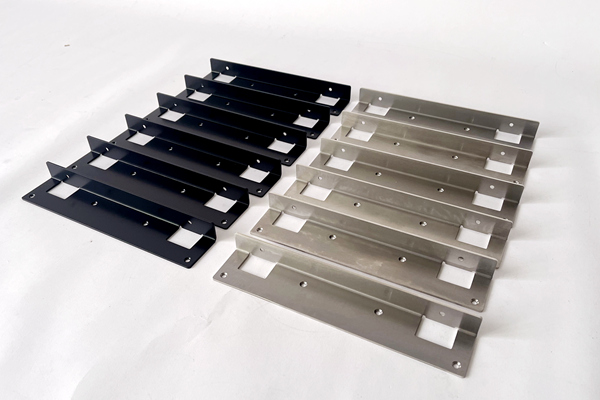
Why Choose Dedicated Low-Volume Approaches?
For engineering teams and procurement professionals, the decision to pursue low-volume manufacturing over mass production involves several strategic considerations:
Cost Efficiency Without Compromise
Traditional hard tooling for sheet metal stamping can cost tens of thousands of dollars and require months of lead time. For production runs under 10,000 pieces, this investment rarely makes financial sense. Low-volume techniques eliminate or drastically reduce tooling costs, with some technologies achieving tool cost reductions of up to 90 percent while maintaining part quality.
Speed-to-Market Advantages
In competitive industries, weeks matter. Where conventional prototype dies might require six to eight weeks, advanced low-volume methods can deliver finished sheet metal parts in as little as three days. This acceleration transforms product development cycles and enables rapid iteration.
Design Flexibility
Low-volume production accommodotes design changes without the penalty of scrapping expensive tooling. This flexibility proves invaluable during pilot runs, market testing, and for custom or limited-edition products where designs may evolve based on customer feedback.
Advanced Technologies Enabling Low Volume Sheet Metal Production
Flexform/Hydroforming Technology
One of the most significant advancements in low volume production sheet metal is Flexform technology. This process uses a high-pressure rubber diaphragm as a flexible die, requiring only one solid tool half. When hydraulic pressure is applied, the diaphragm forces the sheet metal blank to assume the shape of the solid tool.
The advantages are compelling. Multiple parts of varying thicknesses can be formed in a single press cycle. Complex shapes and difficult materials like high-strength alloys can be formed with fewer steps and minimal manual correction. Industry leaders including Ford, BMW, and Boeing have successfully implemented this technology for decades.
Digital Sheet Forming (DSF)
Emerging technologies like Digital Sheet Forming represent the cutting edge of low-volume flexibility. These software-driven systems shape sheet metal directly from CAD files without any custom tooling, dies, or presses. Using proprietary tooling on an XY gantry with up to 2,000 pounds of force, parts can be produced within a day or two, with cycle times under an hour even for large components.
This approach supports a range of materials including cold rolled steel and aluminum, making it ideal for prototyping and low-volume production typically under 10,000 pieces.
Advanced Laser Cutting and Punching
For low volume production sheet metal, modern laser cutting systems offer exceptional precision without tooling costs. Fiber-optic and CO2 lasers deliver tolerances of ±0.005 inches or better, with the ability to cut complex geometries that would be impossible with traditional methods. When combined with punching capabilities, manufacturers can create complex flat patterns with size-limited stamped features efficiently.
Material Considerations for Low-Volume Projects
The versatility of sheet metal fabrication extends to material selection. Common options include:
Aluminum Alloys: Lightweight and corrosion-resistant, aluminum grades like 6061 are popular for aerospace, automotive, and consumer products. Digital forming technologies now support aluminum up to 3.175 mm thickness.
Steel Grades: From cold rolled steel (CRS) in 1008 and 1018 alloys to stainless steels including 304 and 316, low-volume processes accommodate diverse strength and corrosion requirements.
Copper and Brass: For applications requiring electrical conductivity or distinctive aesthetics, red metals remain viable options in low volumes.
Design Guidelines for Low Volume Sheet Metal Success
To maximize the benefits of low volume production sheet metal, designers should consider:
Simplify Tooling Requirements: Design parts that can be formed with universal tools rather than complex, part-specific dies. This approach leverages the flexibility of low-volume methods.
Maintain Uniform Bend Radii: Using consistent bend radii across a part, ideally the industry standard of 0.030 inches, reduces machine setups and accelerates production.
Respect Material Properties: Features should stand away from bends by at least four times material thickness to avoid distortion. This convention, known as 4T, ensures consistent results.
Consider Assembly Strategies: For complex geometries, consider fabricating simpler components and joining them through welding, riveting, or hardware insertion rather than creating single, overly complex parts.
Applications Across Industries
Low volume production sheet metal serves diverse sectors:
Automotive: From prototype body panels to specialty vehicle components and aftermarket upgrades, automotive manufacturers leverage low-volume techniques for development and limited production runs.
Aerospace: The jet engine industry increasingly uses Flexform technology for complex, high-mix components, securing quality and repeatability while saving time and costs.
Medical Devices: Patient-specific parts and small series of medical instruments benefit from the flexibility of low-volume production.
Consumer Electronics: Enclosures, brackets, and accessories for limited-edition products or niche markets.
Industrial Equipment: Spare parts, jigs, fixtures, and low-demand replacement components.
The Economic Case for Low-Volume Production
Beyond technical capabilities, the economic rationale for low-volume approaches continues strengthening. Ford's Freeform Fabrication Technology (F3T) demonstrates material scrap and energy consumption reductions of 70 percent while cutting production costs by 90 percent for suitable applications.
These savings derive from eliminating traditional tooling, reducing material waste, and shortening lead times. For companies testing market response or serving niche applications, low-volume production minimizes financial risk while maintaining product quality.
Future Trends
As manufacturing technology advances, the distinction between prototyping, low-volume, and mass production continues blurring. Hybrid approaches combining additive manufacturing for tooling with traditional forming processes emerge regularly. The integration of digital workflows from design to finished part accelerates, enabling manufacturers to respond faster to market demands.
Conclusion
Low volume production sheet metal represents more than a manufacturing method—it embodies a strategic approach to product development and market engagement. By leveraging advanced technologies like Flexform hydroforming, digital sheet forming, and laser cutting, manufacturers achieve the precision and quality of mass production without its economic burdens.
For companies navigating today's dynamic markets, the ability to produce high-quality sheet metal components in limited volumes isn't merely an option—it's a competitive necessity. Whether developing new products, serving niche markets, or responding to customization demands, low-volume sheet metal production delivers the flexibility, speed, and cost-effectiveness that modern manufacturing demands.
Ready to explore low volume production sheet metal for your next project? Contact our engineering team to discuss how our capabilities can accelerate your product development and market success.




