

Product Development Needs a Functional Prototype Service
In the world of product development, seeing is not always believing. A sleek rendering or a beautifully painted static model can win a design award, but it won’t survive the real world. It won’t tell you if a gear will turn under load, if a housing will crack in extreme heat, or if a startup can convince investors to write a check.
As someone who has spent decades in the manufacturing sector, I’ve watched countless promising designs fail because the team fell in love with the look of their product before proving the function. This is where a professional functional prototype service transitions from being a "nice-to-have" to an absolute non-negotiable step in the engineering process.
What Defines a True Functional Prototype?
To the uninitiated, a prototype is just a model of an idea. To an engineer, a functional prototype is the bridge between concept and commerce. It is a working model built to validate the mechanics, ergonomics, and durability of a design long before you sink hundreds of thousands of dollars into production tooling.
Unlike visual models, which are often created to gauge aesthetic appeal, a functional prototype is about performance. It answers the hard questions:
· Does the mechanism work as intended?
· Can the materials withstand real-world stress?
· Will the parts fit together on an assembly line?
At this stage, we are not just testing the product; we are testing the physics behind it. We are validating assumptions about tolerances, material behavior, and manufacturability.
The Strategic Advantage: De-Risking Your Investment
One of the most common misconceptions I encounter is that a functional prototype service is an added expense. In reality, it is the most effective insurance policy you can buy for your project.
Consider the alternative: going directly to hard tooling. If you cut a steel mold for an injection-molded part and discover a critical design flaw, you aren't just looking at a redesign; you are looking at scrapping a mold that cost tens of thousands of dollars. Rapid manufacturing and prototyping exist specifically to eliminate this risk.
By utilizing a functional prototype service, you engage in an iterative process. You build, test, break, and rebuild. This "fail fast" philosophy is where true innovation lives. It is far cheaper to break a 3D-printed prototype or a CNC-machined part in a lab than it is to break a production mold on the factory floor. Prototyping allows you to identify hidden problems and gather early feedback, ensuring that by the time you hit the market, your product is robust.
Technologies Driving the Functional Prototype
The reason functional prototyping is so powerful today is the sophistication of the technology available. A modern service provider acts as a one-stop shop, wielding a suite of tools to replicate the properties of final production parts.
CNC Machining for Precision:
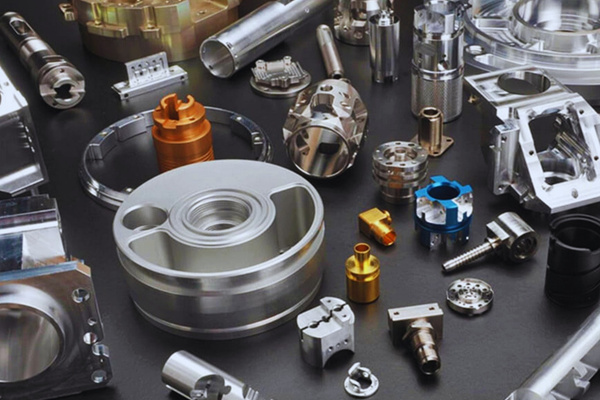
When you need parts that match the strength and tolerance of the end product, CNC machining is the gold standard. Using engineering-grade plastics or aluminum, CNC machining produces parts that are not just representative but are often functionally identical to what you will sell.
Advanced 3D Printing:
For complex geometries, technologies like SLS (Selective Laser Sintering) and SLA (Stereolithography) allow for the creation of durable prototypes that can simulate overmolds, living hinges, or intricate internal channels. The ability to use production-like materials, such as nylon or tough resins, means you can conduct meaningful mechanical tests.
Vacuum Casting:
For short-run needs where you require 10 to 50 copies of a part in polyurethane materials, vacuum casting offers a quick, cost-effective way to get functional parts with a finish that mimics production-grade injection molding.
Real-World Proof: Why "Good Enough" Isn't Enough
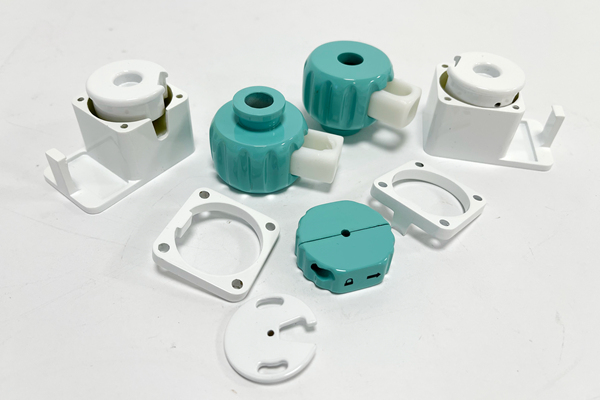
The value of a high-quality functional prototype is best illustrated through real-world engineering challenges. A specialized prototyping partner that the tide turned could change the product development processes. Through iterative prototyping, engineers are creative to develop a novel method of insert molding and sub-overmolding. They didn't just prove the design; they invented the process to build it. The result was a working, finished prototype that not only proved the concept but dazzled investors and secured the funding needed to go to market.
Similarly, in the HVAC industry, companies like RedDOT use functional prototyping to solve complex sealing issues. By prototyping multiple design variations of a rubber bulb seal groove—a task that cost mere dollars and hours with FDM technology—they avoided the massive expense of cutting multiple steel molds to test the same theory. This is the essence of informed engineering.
From Prototype to Production: A Seamless Handoff
A great functional prototype service does not work in a vacuum. The ultimate goal is always "scale." Therefore, the prototyping phase must be conducted with a clear eye toward Design for Manufacturing (DFM).
When prototyping is done correctly, it informs the production process. The supplier should be analyzing draft angles, wall thicknesses, and gate locations during the prototype phase to ensure the design translates perfectly to injection molding or high-volume casting. The data gathered during functional testing—stress points, wear rates, thermal expansion—directly dictates the material selection and tooling strategy for mass production.
Conclusion
In the modern manufacturing landscape, skipping the functional prototype stage is a gamble you cannot afford to take. Whether you are a startup looking for venture capital or an established OEM rolling out a new product line, a functional prototype service provides the technical validation necessary to move forward with confidence.
It transforms your idea from a digital file into a tangible asset. It proves that your product works, it shows that your supply chain is ready, and it signals to the market that you are serious about quality. When you are ready to move beyond the drawing board and into the real world, ensure your first step is a functional one.




