

The Critical Role of Low-Volume Production in Design Validation
In the modern manufacturing ecosystem, the journey from a digital blueprint to a market-ready product is fraught with uncertainty. For decades, the industry relied on a linear progression: concept, engineering, prototype, tooling, and mass production. However, this "waterfall" approach has proven brittle, expensive, and painfully slow. Today, the fulcrum of successful product development has shifted to a phase that sits strategically between a one-off model and high-volume output: low-volume production (LVP) . Often defined as batches ranging from 50 to 10,000 units, LVP has emerged not merely as a stopgap but as the definitive arena for product design validation. While additive manufacturing (3D printing) and CNC-machined prototypes are invaluable for form and fit checks, it is low-volume production—utilizing production-grade materials and processes—that provides the indispensable, non-negotiable proof of manufacturability, durability, and economic viability. This essay argues that for rigorous design validation, low-volume production is superior to rapid prototyping because it offers the "truth" of production conditions, delivering both the high-fidelity data required for engineering confidence and the cost-efficiency necessary for iterative innovation.
The Validation Gap: Why Prototypes Are Not Enough
To appreciate the value of LVP, one must first recognize the limitations of rapid prototyping. Stereolithography (SLA) and fused deposition modeling (FDM) parts are exceptional for visual aids and ergonomic testing. However, they are notoriously anisotropic; their mechanical properties differ drastically depending on the build orientation. A 3D-printed bracket might snap under a torque that an injection-molded or cast part would withstand with ease. Similarly, a CNC-machined billet part is structurally sound but fails to replicate the internal molecular structure, grain flow, or residual stress patterns of a forged or cast component.
Rapid prototypes simulate geometry; they do not simulate physics. When a design engineer validates a part using a prototype, they are validating against a set of properties that will fundamentally change in the final product. This creates a dangerous "validation gap." Design changes made based on prototype behavior are often irrelevant—or worse, detrimental—to the production part. For instance, wall thicknesses optimized for a stiff SLA resin may cause sink marks or warpage in injection-molded polypropylene. Gate locations, weld lines, and cooling rates are entirely invisible to the CNC operator but dictate the structural integrity of a molded housing.
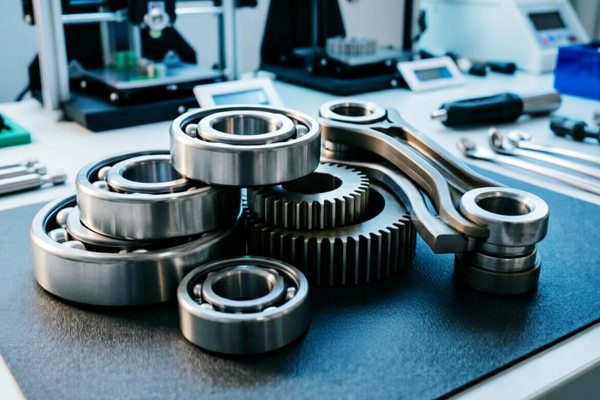
Low-volume production closes this gap by utilizing the actual manufacturing process—or a direct derivative thereof—that will be used for mass production. Whether it is low-pressure injection molding, silicone vacuum casting, or sheet metal stamping using soft tooling, LVP subjects the part to the real thermal and mechanical stresses of production. This is the first critical advantage: process validation. Only by running the polymer through a heated barrel and injecting it into a steel cavity can an engineer see where the weld lines form, where the ejector pins leave marks, and where the shrinkage creates dimensional distortion. This data cannot be extrapolated from a printed model; it must be empirically observed.
The "Affordability of Truth": Economic Rationality of LVP
The second pillar of LVP's superiority is its unique economic positioning. Rapid prototyping often falls into a cost trap: while the individual unit is expensive, the setup cost is low. This encourages a "print and pray" mentality, where engineers are hesitant to invest heavily in iterative changes because the per-part cost is prohibitive for large batches. Conversely, traditional mass production demands a staggering upfront investment in hard tooling—often exceeding $50,000 for a multi-cavity injection mold. This expense stifles iteration, as any design change requires costly mold modifications or a complete re-make.
Low-volume production occupies the "Goldilocks zone." By utilizing rapid tooling (such as aluminum molds or 3D-printed composite tooling) or bridging processes (like urethane casting), manufacturers can achieve production-grade parts at a fraction of the hard tooling cost—often between 20% to 40% of the final production tooling budget. This drastically lowers the barrier to entry for design validation.
Consider a medical device housing requiring 500 units for clinical trials. Using CNC machining for 500 parts of a complex geometry would cost exorbitantly per unit and consume weeks of machine time. Using 3D printing would be faster but would fail the biocompatibility and sterilization requirements. LVP via silicone molding, however, can produce 500 parts in a production-grade thermoset resin that mimics the final polymer's properties. The tooling cost is a few thousand dollars, and the unit price is rational. This economic model permits engineers to validate the design, destroy the parts in destructive testing, modify the CAD file, and produce a new batch of 500 for the next trial without bankrupting the project. This economic viability transforms design validation from a "one-shot" event into a fluid, iterative conversation between the engineer and the physical world.
Functional Testing and Market Feedback
Perhaps the most compelling argument for LVP lies in its ability to deliver statistically relevant samples for rigorous functional testing. Design validation is not merely about "does it fit?" but "does it work under stress, over time, and across different environmental conditions?" To conduct vibration testing, thermal cycling, salt-spray corrosion testing, and fatigue analysis, an engineer requires a statistically significant sample size—typically 30 to 50 parts. Rapid prototyping cannot provide this economically or materially. The variance between one 3D-printed part and the next is often too high to provide reliable statistical data; the layer adhesion varies, and the porosity fluctuates.
Low-volume production, conversely, replicates the repeatability of mass production. Using the same cavity, the same cycle times, and the same batch of raw material, LVP yields parts with consistent density, hardness, and dimensional stability. This repeatability allows engineers to run a Design of Experiments (DOE) to understand the manufacturing tolerance. They can identify which features are sensitive to process drift and adjust the design accordingly—a validation activity that is utterly impossible with additive prototypes.
Furthermore, LVP enables early-stage market feedback with actual, functional products. In the consumer electronics and automotive sectors, companies use LVP parts to build beta units for user testing. These units are not "look-alikes"; they are "work-alikes." They can be dropped, immersed, heated, and stressed by end-users. The feedback from this stage is profoundly more valuable than a focus group staring at a resin model. Users can comment on the tactile feel of a soft-touch overmold, the insertion force of a connector, or the acoustic resonance of a housing. These attributes are process-dependent; they are the result of the specific shrinkage and surface finish achieved by the production tool. LVP ensures that the user is testing the product, not a proxy for the product.
Risk Mitigation and Supply Chain Integration
Lastly, low-volume production serves as a vital risk mitigation strategy. It acts as a "dress rehearsal" for the supply chain. By engaging in LVP, procurement teams can negotiate with suppliers, establish quality inspection protocols (CMM and optical scanning), and validate assembly fixtures. It exposes the logistical challenges of handling the part—packaging, stacking, and transportation—before the company is committed to a million-unit order.
This is particularly crucial in industries like aerospace and automotive, where the cost of failure is astronomically high. Validating a casting process at low volume allows engineers to tweak the gating system and riser placement to eliminate porosity. These adjustments, made during the LVP phase, ensure that when the hard tooling is finally cut for high-volume production, the process is already robust. It is far cheaper to modify an aluminum rapid tool than to scrap a hardened steel production mold. In this sense, LVP is not just a validation tool; it is a form of "manufacturing insurance."
Conclusion
In conclusion, while rapid prototyping remains an essential tool for initial concept visualization, it falls significantly short of providing the rigorous, reliable validation required for modern product development. The mechanical properties are a facsimile, the statistical data is unreliable, and the economic model discourages true iteration. Low-volume production, conversely, offers the "affordability of truth." By leveraging rapid tooling and production-grade processes, Low-volume production delivers parts that are materially and dimensionally representative of the final product. It provides the empirical evidence required to certify structural integrity, the repeatability needed for statistical quality control, and the economic flexibility to fail fast and recover faster. As products grow more complex and time-to-market windows compress, the ability to validate a design under real manufacturing conditions before scaling up is not just an advantage—it is a prerequisite for survival. Low-volume production stands as the most efficient, credible, and economically sound bridge between a promising idea and a proven, production-ready reality.




