

Custom CNC Plastic Parts Fabrication: Materials, Processes, and Design Best Practices
Custom CNC plastic parts fabrication has emerged as a cornerstone of modern product development, bridging the gap between rapid prototyping and production-grade manufacturing. While CNC machining is often associated with metals, plastics present a distinct set of opportunities and challenges that demand specialized knowledge. From medical device housings and electronic enclosures to fluidic manifolds and automotive interior components, machined plastic parts deliver dimensional accuracy, repeatability, and design freedom that alternative processes struggle to match at low-to-medium volumes. This article explores the material landscape, process considerations, and design principles that define successful custom CNC plastic parts fabrication.
Why CNC Machining for Plastic Parts?
Injection molding dominates high-volume plastic production, but its economics collapse at low quantities due to tooling costs and long lead times. CNC machining eliminates tooling entirely, enabling economical production from a single unit to several thousand. This makes it ideal for prototypes, bridge production, and end-use parts in specialized equipment. Machined plastics also offer superior mechanical properties compared to 3D-printed alternatives—no layer adhesion weaknesses, better surface finishes, and access to engineering-grade thermoplastics formulated for demanding environments. Furthermore, design changes can be implemented instantly, supporting iterative development cycles without penalty.
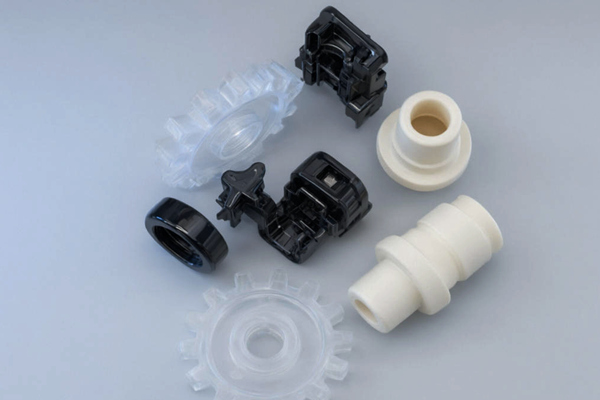
Material Selection: Matching Plastic to Application
Material choice is the single most consequential decision in custom CNC plastic parts fabrication. Each polymer family offers a distinct balance of mechanical, thermal, chemical, and electrical properties.
ABS remains a popular general-purpose choice for its toughness, machinability, and cost-effectiveness, suitable for enclosures and prototype housings.Polycarbonate (PC)delivers exceptional impact resistance and optical clarity, making it a staple for transparent guards and medical equipment covers.POM (acetal)is prized for its low friction, dimensional stability, and machinability—the default for gears, bearings, and precision mechanical components.PTFE (Teflon)provides unmatched chemical inertness and low friction, though its softness demands careful fixturing.
For high-temperature applications,PEEK and PEI (Ultem)withstand continuous service above 150°C while maintaining strength and chemical resistance, common in aerospace and semiconductor equipment.PPSoffers excellent dimensional stability and chemical resistance at moderate cost.HDPE and UHMWserve wear-intensive and food-safe applications. Medical-grade variants of PC, PEEK, and ABS—compliant with USP Class VI or ISO 10993—are available for healthcare components.
Specifying the correct grade matters: glass-filled or carbon-filled variants increase stiffness and reduce thermal expansion but accelerate tool wear, requiring diamond-coated or carbide tooling and adjusted feeds and speeds.
Process Considerations Unique to Plastics
Machining plastics differs fundamentally from metalworking. Plastics exhibit lower thermal conductivity, meaning heat generated during cutting dissipates slowly and can cause melting, smearing, or dimensional distortion. Sharp, high-ra helix tooling with polished flutes and generous rake angles is essential. Climb milling is generally preferred to reduce heat buildup and improve edge quality.
Fixturing demands attention: plastics are more elastic than metals and prone to deflection under clamping pressure. Vacuum fixtures, soft jaws, and custom sacrificial supports help maintain accuracy without inducing stress. Thermal expansion is significant—roughly ten times that of steel for many polymers—so temperature-controlled environments and in-process measurement improve tolerance achievement. Annealing stress-relieved stock before machining, and sometimes after, prevents warping and cracking in service.
Tolerances achievable in plastics typically range from ±0.05 mm to ±0.1 mm for general features, with tighter control possible on critical dimensions given appropriate material and geometry. Thin walls, deep pockets, and sharp internal corners should be discussed with the fabricator early, as these features challenge both rigidity and heat management.
Surface Finishes and Post-Processing
As-machined finishes are often acceptable for functional parts, but cosmetic and sealing requirements may call for secondary operations. Bead blasting creates a uniform matte appearance; vapor polishing smooths surfaces on amorphous plastics like PC and ABS; flame treatment improves adhesion for bonding or painting. Threaded inserts, heat-set or ultrasonic, provide durable metal threads in plastic housings. Laser marking supports part identification and traceability.
Quality Assurance and Sourcing
Reputable fabricators provide material certificates confirming grade and lot, dimensional inspection reports, and first article inspection for critical programs. For regulated industries, ask about ISO 9001 or ISO 13485 certification depending on application. Early design-for-manufacturability feedback is a strong indicator of a capable partner—suppliers should flag stress concentrations, tolerance stack-ups, and features better suited to alternate processes. Clarify lead times for both prototyping and repeat orders, and confirm whether the shop maintains inventory of your specified grade to avoid substitution.
Conclusion
Custom CNC plastic parts fabrication combines material science, precision machining, and thoughtful design to deliver components that perform reliably across demanding applications. Success hinges on selecting the right polymer for the environment, understanding the thermal and mechanical quirks that distinguish plastics from metals, and collaborating with a fabricator who provides transparent quality documentation and early engineering input. Organizations that master these elements gain a flexible, cost-effective pathway from concept to production-ready plastic components.




