

CNC Complex Parts: Precision Manufacturing for Demanding Applications
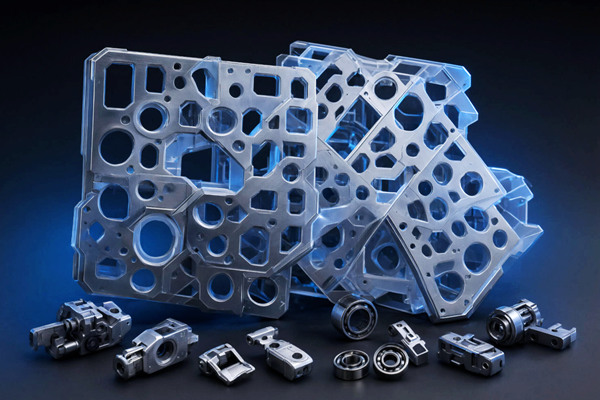
In today's highly competitive manufacturing landscape, the demand for CNC complex parts has surged across industries such as aerospace, medical devices, automotive, and telecommunications. These intricate components, characterized by tight tolerances, complex geometries, and multi-feature designs, require advanced machining capabilities and deep engineering expertise. This article explores what defines CNC complex parts, the challenges they present, and how partnering with the right machining specialist can turn complexity into a competitive advantage.
What Are CNC Complex Parts?
CNC complex parts are machined components that demand more than standard turning or milling operations. They typically feature:
1. Multi-axis geometriesrequiring 4-axis or 5-axis simultaneous machining
2. Tight tolerancesoften measured in microns (±0.005 mm or tighter)
3. Intricate internal featuressuch as deep pockets, undercuts, and cross-holes
4. Exotic materialsincluding titanium, Inconel, stainless steel, and engineering plastics
5. High surface finish requirementsfor sealing surfaces or optical functions
Unlike simple turned or milled parts, complex components often combine multiple operations into a single setup, reducing cumulative errors and lead times.
The Engineering Challenges Behind Complexity
Manufacturing CNC complex parts is as much about process engineering as it is about machining. Key challenges include:
-
Fixture design and workholding– Complex parts often lack natural clamping surfaces. Custom fixtures, soft jaws, and modular systems are essential to maintain rigidity without distorting the part.
-
Tool accessibility and collision avoidance– Deep cavities and angled features demand specialized tooling and simulation software to verify toolpaths before cutting metal.
-
Thermal management– Heat buildup during aggressive machining of hard materials can warp thin walls and alter dimensions. High-pressure coolant and optimized feeds and speeds are critical.
-
Quality verification– Complex geometries are difficult to inspect with traditional gauges. CMM (coordinate measuring machine) programming and in-process probing ensure dimensional integrity.
Why 5-Axis CNC Machining Matters for Complex Parts
Five-axis simultaneous machining has transformed the production of CNC complex parts. By rotating the tool or workpiece along two additional axes, manufacturers can:
1. Machine undercuts and compound angles in a single setup
2. Reduce the number of fixtures and setups, improving accuracy
3. Achieve better surface finishes with shorter, more rigid tools
4. Shorten lead times and lower production costs for low-to-medium volumes
For industries like aerospace, where part complexity and material costs are high, 5-axis machining is often the only viable path to meeting specifications.
Materials and Applications
CNC complex parts are machined from a wide range of materials. Aluminum alloys are common in aerospace brackets and heat sinks, while titanium and stainless steel dominate medical implants and surgical instruments. High-temperature alloys such as Inconel are essential for turbine components and oil and gas equipment. Each material demands tailored cutting strategies, tool coatings, and coolant approaches.
Quality Assurance: The Backbone of Complex Part Manufacturing
For CNC complex parts, quality cannot be inspected in—it must be built in. Leading manufacturers implement:
1. First article inspection (FAI)with detailed dimensional reports
2. Statistical process control (SPC)to monitor variation
3. Material traceabilityfrom mill certificate to finished part
4. Surface finish and hardness testingwhere applicable
Compliance with standards such as ISO 9001, AS9100 (aerospace), and ISO 13485 (medical) is often a prerequisite for supplier approval.
Choosing the Right Partner for CNC Complex Parts
When sourcing complex machined components, consider a supplier's:
1. Machine capability– 5-axis centers, Swiss-type lathes, and mill-turn equipment
2. Engineering support– DFM (design for manufacturability) feedback early in the process
3. Tooling and fixture expertise– in-house design reduces lead times
4. Quality systems and certifications– verified through audits and references
5. Experience in your industry– sector-specific knowledge shortens the learning curve
Conclusion
CNC complex parts represent the frontier of precision manufacturing. Success requires a blend of advanced multi-axis machinery, thoughtful process engineering, rigorous quality control, and collaborative problem-solving. By understanding the technical and operational factors that define complex part production—and by selecting a manufacturing partner with proven expertise—original equipment manufacturers can reduce risk, accelerate time-to-market, and achieve the performance their applications demand. In an era where product differentiation often hinges on precision, mastering CNC complex parts is not just a manufacturing decision—it is a strategic advantage.




